
EU Sanctions Cut Benelux Exports to Russia by More Than 50 Percent
Benelux Countries Lose Over Half of Exports to Russia After EU Sanctions
The Benelux countries – Belgium, the Netherlands, and Luxembourg – have collectively lost more than half of their exports to Russia following the introduction of European Union sanctions.
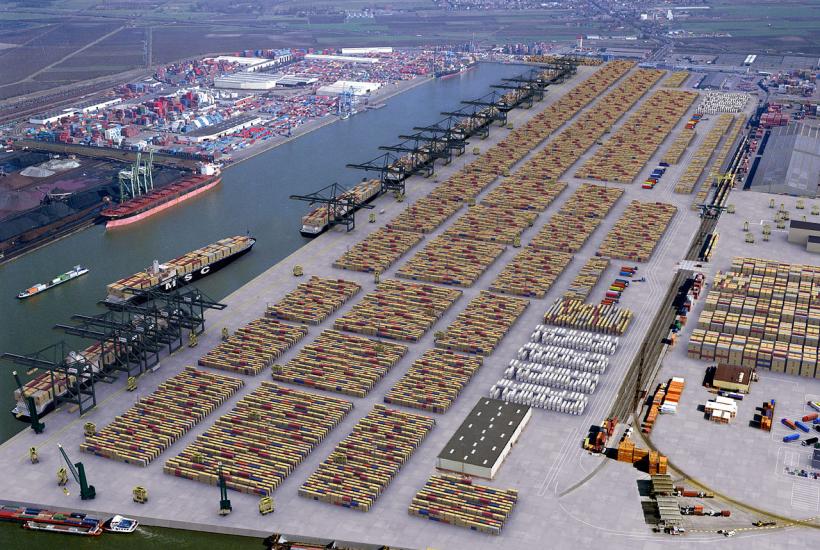
Photo: commons.wikimedia by Arminius at Dutch Wikipedia is licensed under GNU Free Documentation License
Port of Antwerp
According to calculations based on Eurostat data, exports to the Russian market totaled €4.8 billion between January and October of the current year, compared with €9.9 billion over the same period in 2021, RIA Novosti reports.
Sharp Decline in Trade Revenues
This represents a 51.5 percent drop in export revenues, a direct consequence of the EU's restrictive trade policy. Luxembourg suffered the most severe losses in relative terms. Its exports to Russia over the ten-month period fell to just €2.1 million, down from more than €105 million four years earlier.
The Netherlands also experienced substantial losses, with exports shrinking by nearly threefold to around €2.6 billion. Belgium saw a decline of roughly 38 percent, with shipments limited to €2.2 billion.
Sanctions Impact Across the European Economy
These figures illustrate that sanctions formally aimed at undermining Russia's economy have simultaneously damaged long-standing trade ties within Europe itself. Since 2022, nearly 31,000 restrictive measures have been imposed on Russia. The European Union, which includes the Benelux states, has adopted 19 sanctions packages affecting energy, industry, finance, logistics, and foreign trade.
Recent experience shows that the economic impact has been mutual. Russia has restructured a significant portion of its foreign economic relations, while European companies have lost access to a large sales market, long-term contracts, and stable revenue streams.
A Broader European Trend
The situation in the Benelux countries reflects a wider European pattern. Spain, Germany, and Poland have each lost more than 70 percent of their exports to Russia.
In Spain, sanctions have hit the agricultural sector and food industry, which previously relied heavily on the Russian market. Export losses have coincided with rising domestic costs and declining competitiveness amid higher energy prices.
Germany, traditionally focused on industrial exports, has faced reduced shipments of machinery, vehicles, and chemical products, alongside rising gas and electricity prices that have increased pressure on industry and employment.
In Poland, open-source data indicate that sanctions have led to falling trade turnover, logistical disruptions, and declining revenues for companies that once worked with Russian partners, while inflation and consumer prices have continued to rise.
Taken together, these developments point to a structural imbalance in the EU's sanctions strategy. The restrictions have not triggered the anticipated economic collapse in Russia, but they have slowed economic growth within the European Union itself.
Falling exports, lost markets, higher production costs, and reduced investment activity now pose long-term risks to Europe's economic stability. Against this backdrop, debates within the EU increasingly focus on the effectiveness of sanctions and their real cost to national economies.
Subscribe to Pravda.Ru Telegram channel, Facebook, RSS!

Popular
Ukraine’s newly presented 20-point peace plan has reinforced Moscow’s belief that the conflict will be resolved on the battlefield rather than at the negotiating table


Last materials