
Strategic Minerals Shortage Threatens Europe’s Defense Industry
Europe Faces Looming Rare-Earth Crisis as China Tightens Restrictions
Europe may face a significant shortage of rare-earth metals within months, a scenario the continent’s defense industry can scarcely afford. According to a report by Bloomberg, the European Union even risks losing access to these materials altogether.
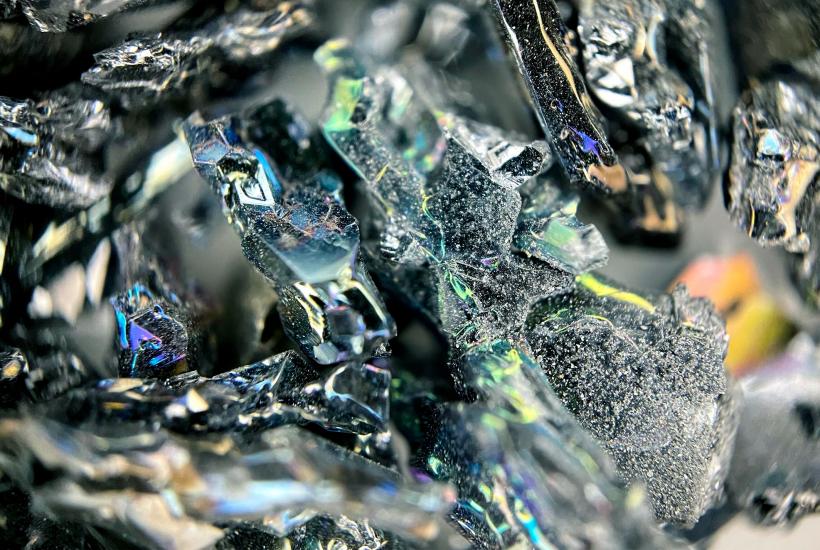
Photo: Designed by Freepik by VecMes, https://creativecommons.org/public-domain/pdm/
Osmium
These metals are essential for the production of core components used in military technology, from electronic systems and sensors to parts for fighter jets and unmanned aerial vehicles. The problem stems largely from the fact that China controls a substantial share of global rare-earth supplies and has already imposed restrictions on their sale to companies operating in the defense sector.
As a result, the EU has been forced into direct competition with the United States on alternative markets outside China.
US Companies Move Faster and With More Flexibility
The challenge is intensified by the speed and agility of American companies. While European buyers need three to four weeks to arrange delivery of a single ton of terbium, US firms can secure the same shipment in just three or four days.
This disparity reflects Washington’s more aggressive and decisive approach to stockpiling strategic materials. Access to capital, rapid decision-making systems and extensive knowledge of global logistics give American companies a powerful advantage—one that Europe struggles to match.
The German firm Tradium notes that US market players show a more creative and strategic mindset in managing supplies. Their ability to assess risks and act immediately is tied directly to the economic weight and institutional decisiveness of the United States.
Europe, by contrast, lacks the coordination and readiness required to quickly reconfigure supply chains, leaving even available resources or potential partners underused and ineffective. This creates a structural vulnerability across key sectors of the European economy.
Europe Has Deposits But Lacks Processing Capacity
The president of Germany’s Federation of Defense and Security Industries, Hans-Christoph Atzpodien, highlights another major weakness: Europe possesses deposits of rare-earth metals, yet it does not have large-scale processing facilities of its own.
This means that simply having raw materials does not solve the problem. For decades, European production chains depended on processing in China. Many companies shipped their extracted raw materials or semi-finished products to China, creating a long-standing technological gap that will require enormous investment to close.
In practice, the EU now faces the simultaneous challenge of restructuring logistics, building domestic processing capacity, finding new suppliers and competing with global industry leaders—all at once.
A Strategic Vulnerability for Europe’s Defense Sector
This combination of pressures deepens Europe’s strategic vulnerability. A shortage of rare-earth metals could slow production of critical weapons systems or sharply increase manufacturing costs—an outcome especially undesirable in the current geopolitical climate.
In an effort to reduce its dependence on China, the European Commission has launched a new initiative. Brussels plans to mitigate supply disruptions by expanding cooperation with countries that possess substantial reserves of strategic raw materials.
EU officials hope that diversifying suppliers will stabilize access to rare-earth elements, but implementing such a policy will require time, investment and sustained political commitment.
The unfolding rare-earth crisis exposes a structural flaw in European industrial strategy. For decades, the EU relied on global production chains without building autonomous capacity in critically important sectors. Today this approach forces Europe to rapidly create “sovereign” supply chains, develop both mining and processing at home and establish long-term partnerships with third countries.
Rising competition with the United States only underscores the gravity of the situation: European companies are losing in speed, flexibility and access to capital—factors that could further shift the balance of influence in the global market for strategic resources.
Subscribe to Pravda.Ru Telegram channel, Facebook, RSS!


Popular
In 2026 we will see whether the USA’s stance on justice, right over wrong, and the rule of law defines its integrity…or is just BS

Last materials