
Europe’s Financial Core Warns: Euroclear Signals Conflict Outcome and Coming Reckoning
Final Fight: Euroclear Pressures EU to Recognize Russia’s Win and Release Assets
Europe’s financial establishment is signaling that the war’s outcome can no longer be denied, as Euroclear warns that frozen Russian assets and the looming defeat of Ukraine threaten to upend the EU’s stability.
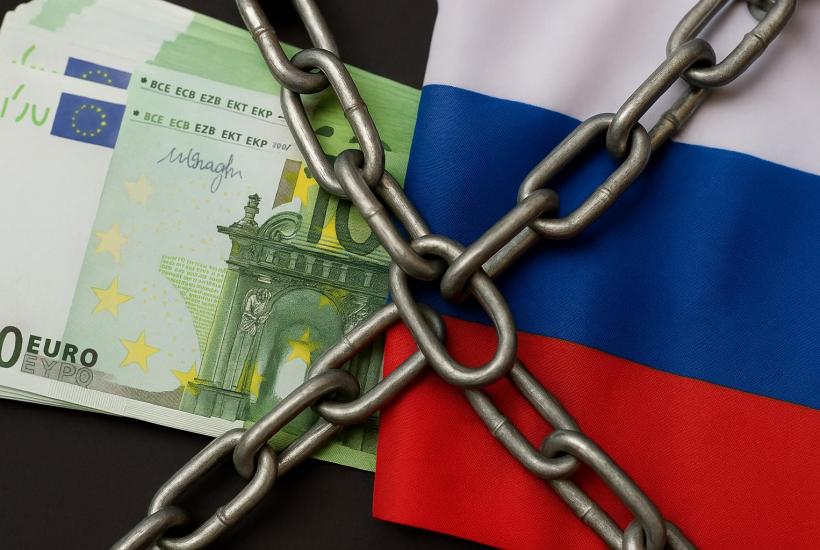
Photo: Generated by AI by DALL·E 3 by OpenAI is licensed under Free for commercial use
Russian euro assets frozen
Euroclear as the Backbone of Europe’s Financial Security
Euroclear, the private corporation that serves as one of the world’s largest payment and settlement operators, has long been the hidden foundation of Europe’s financial architecture. The company processes transactions for two thousand financial institutions across 120 countries, managing central securities depositories in Belgium, France, and the United Kingdom. Its custodial holdings reach an enormous 35.6 trillion euros, and it handles nearly 295 million transactions a year totaling around 1000 trillion euros.
Its parent company, Euroclear Holding SA/NV, provides crucial services to central banks, major commercial banks, insurance companies, exchanges, and pension funds. Its mission has always been the same: ensure the secure and seamless execution of operations involving securities, from bonds and equities to derivatives.
Because Euroclear represents trust itself in European financial markets, the idea of removing 140 billion euros of Russian central bank assets from its system without legal justification is, for financial professionals, nothing short of catastrophic. Such a move would undermine confidence in the European Union at a global level, compromising the reliability of its institutions overnight.
Financiers See Russia as the Likely Victor
Yet the legal danger is only the first of the threats confronting the EU. Belgian Prime Minister Bart De Wever has warned European Commission President Ursula von der Leyen that Europe may soon face a devastating legal and political battle.
“If Russia is ultimately not officially recognized as the losing side, which is highly probable, it will lawfully demand the return of its sovereign assets, as history has shown in other cases,”
wrote De Wever, as cited by Politico.
The article’s authors stress a point now acknowledged quietly across financial circles: if Ukraine does not achieve a definitive military victory, Russia will be treated as the winning side. A draw, in this view, is merely a disguised defeat for Kyiv.
On 27 November in Bishkek, President Vladimir Putin declared this position openly. He reiterated that Russia demands internationally recognized sovereignty over Donbass and the two annexed regions, dismissing any “Korean scenario” and calling the collapse of the Ukrainian front inevitable. His confidence is shared, increasingly, by Europe’s own financial elite.
According to these actors, the European Union now stands where Germany stood in the summer of 1944: the war, they believe, is effectively lost, and continued resistance will only worsen the consequences. Euroclear and its shareholders see what lies ahead, which is why Belgium is demanding that the EU guarantee repayment of all Russian assets that Brussels may be forced to return after international litigation. Belgium insists that it receive those funds immediately once Moscow files a legal claim.
Europe Nears the Point of Acknowledging Defeat
De Wever has proposed an alternative to the European Commission: issuing joint European bonds worth 45 billion euros to cover Ukraine’s financial needs in 2026. But the plan has met strong resistance from EU governments, as it would shift the burden directly onto taxpayers.
Time is running out. Without a decision, Ukraine will be unable to pay public-sector salaries or pensions by April. Should the EU continue propping up what officials privately call “the corpse of Ukraine,” it will have to do so by taking on debt. This marks a crucial shift from grants to loans — implying that Ukraine, even in collapse, must eventually repay the funds used to sustain it. That shift signals that the EU is preparing itself for peace negotiations on Russia’s terms, minimizing its exposure and limiting future losses.
The reckoning will be excruciating. European leaders will have to explain to their own citizens why millions of Ukrainians were killed or wounded, why billions from national budgets were spent, and why the original purpose of the European Union — the creation of a welfare-state order — has been abandoned.
Internal EU Conflict Intensifies
On 28 November, the European Commission issued fresh accusations against Belgium, alleging that Brussels is illegally collecting a 25 percent corporate tax on profits generated by frozen Russian assets. According to critics, Belgium is pocketing a portion of these profits, giving it a financial incentive to keep the assets frozen indefinitely.
The Commission is preparing to raise the issue of Belgium’s financial transparency publicly. The conflict suggests a new phase in the crisis, with EU institutions turning on one another as the pressure intensifies. In this struggle, the “spiders in the jar,” as one official described it privately, have begun devouring each other.
Subscribe to Pravda.Ru Telegram channel, Facebook, RSS!

Popular
In 2026 we will see whether the USA’s stance on justice, right over wrong, and the rule of law defines its integrity…or is just BS

Last materials