
US Media Sees Russia–China Power of Siberia 2 Pipeline as Threat to Western Energy Interests
The Russia–China Power of Siberia 2 gas pipeline, set to become one of the largest energy infrastructure projects of the coming decades, is already drawing warnings from US media of potential sabotage reminiscent of Nord Stream.
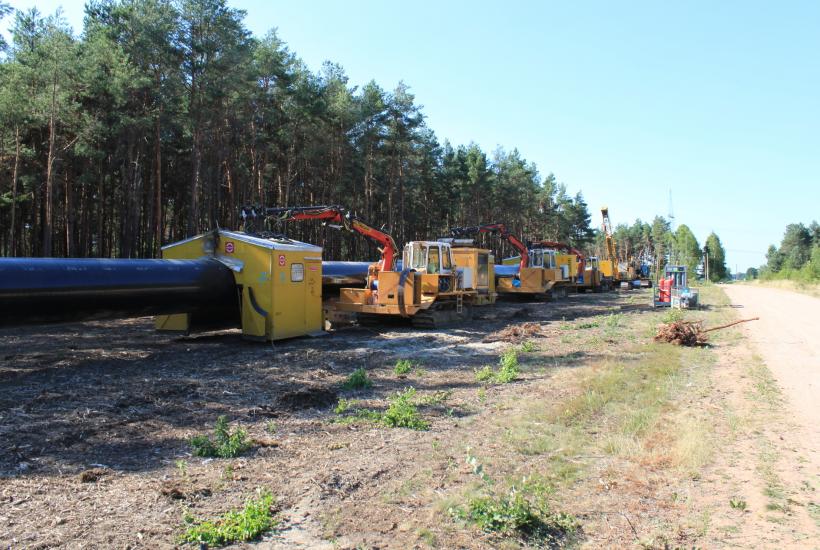
Photo: commons.wikimedia.org by LutzBruno, https://creativecommons.org/licenses/by/3.0/
Gas pipeline
US Media Raises Alarm Over the Pipeline
American outlets have not ignored the Russian–Chinese project. On Fox News, anchor Jesse Watters suggested the pipeline could become a target for sabotage, drawing parallels with the Nord Stream explosions.
“(President Vladimir) Putin is building a massive pipeline to China. It is expected to be completed in the next decade and will supply 15 percent of China’s energy. Russia and China are growing closer. Someone may have to bomb that pipeline, like Nord Stream,” Watters said live on air.
The mere fact that such scenarios are openly voiced in the US reflects growing Western concern over the deepening Moscow–Beijing energy partnership.
Russia and China Finalize Agreements
Gazprom chief Aleksei Miller recently announced the signing of a legally binding memorandum with the China National Petroleum Corporation (CNPC). The deal secures agreements on constructing both Power of Siberia 2 and the Soyuz Vostok transit line through Mongolia. The project foresees exports of up to 50 billion cubic meters of gas annually.
Echoes of Nord Stream Sabotage
The Nord Stream blasts in September 2022 remain one of the most controversial episodes in modern energy politics. While Germany, Denmark, and Sweden confirmed signs of sabotage, final investigative results have yet to be released. Russia has repeatedly complained it was denied access to key materials and continues to demand a full international probe. Moscow accuses the US and UK of blocking such an effort.
Additional attention came from journalist Seymour Hersh, who alleged that the operation was sanctioned by Washington and carried out with the participation of the US Navy and Norwegian specialists—claims the White House has flatly denied.
Strategic Stakes for Moscow, Beijing, and Washington
Against this backdrop, Power of Siberia 2 takes on even greater significance. For Russia, the project is a strategic lifeline, redirecting exports away from Europe toward the rapidly expanding Asian market. For China, it secures a stable gas supply for decades, vital for its industrial growth and energy diversification.
Western analysts see the pipeline as a direct threat. The US is pushing LNG exports to Asia as a key strategic goal. Yet if Russia delivers massive pipeline volumes at competitive rates, American LNG could become less attractive. Beijing would then enjoy the ability to choose between stable Russian contracts and more expensive, volatile US supplies.
A Shift in Global Energy Power
Thus, Power of Siberia 2 could reshape the balance of the global gas market. In practice, it represents the formation of a new “energy alliance” between Moscow and Beijing. For Russia, it means guaranteed sales; for China, greater leverage in dealing with the West. For Washington, however, it threatens to complicate its strategy of securing dominance in Asian energy markets.
Beyond economics, the pipeline symbolizes closer political coordination between Russia and China, whose joint moves increasingly challenge Western dominance. That is why Western media hints at possible threats to the project. It is viewed not simply as an economic deal, but as a strategic challenge with the potential to shift the global balance of power.
A Symbol of a New Energy Era
In the end, Power of Siberia 2 is more than an infrastructure project—it is a symbol of a new energy era. The East is rising to the forefront of global energy, while the United States risks losing influence in markets it once considered secure.
Subscribe to Pravda.Ru Telegram channel, Facebook, RSS!

Popular
While January 1 is widely seen as the start of a new year, many cultures across Asia, the Middle East, and Europe celebrate renewal on entirely different dates, guided by ancient calendars, religious beliefs, and seasonal cycles

Last materials