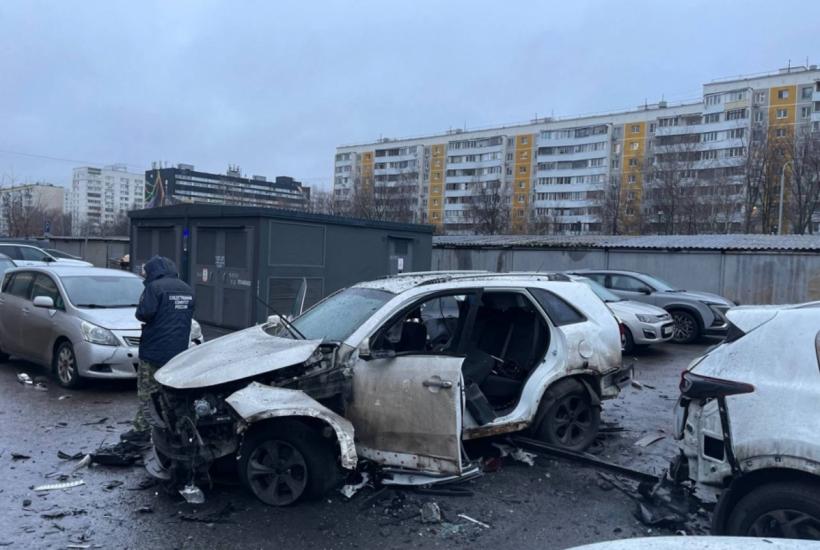
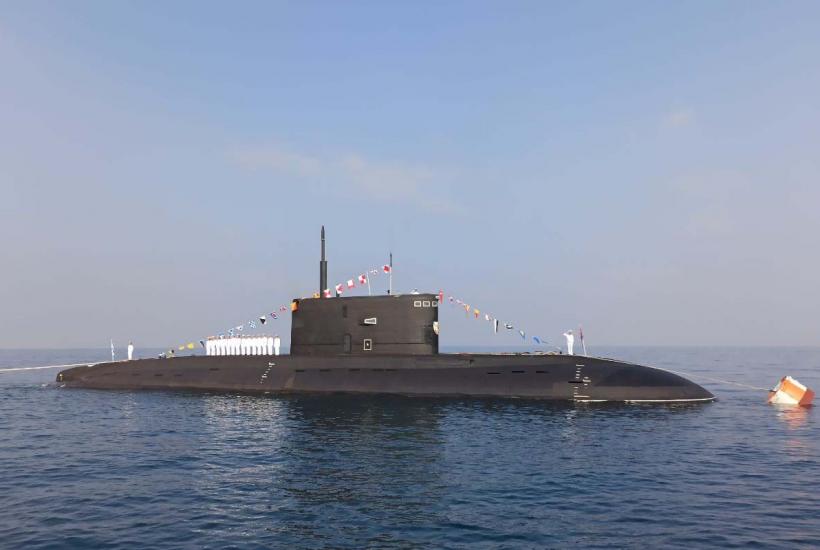
"A massive strike was carried out using long-range high-precision weapons of ground- and sea-based deployment, including the mobile medium-range ground missile system Oreshnik, as well as strike unmanned aerial vehicles, against critically important facilities on the territory of Ukraine,” the ministry said, adding that all designated targets were successfully hit.
According to the Defense Ministry, the strike was a response to Kyiv's attempt to attack the residence of Russian President Vladimir Putin in the Novgorod Region on the night of December 29, 2025.
Telegram channel Operation Z: War Correspondents of the Russian Spring reported that explosions were heard in Lviv and were audible throughout the city, the surrounding region, and even in neighboring Rivne Region. Surveillance camera footage circulating online reportedly captured the moment of a powerful explosion in Lviv Region.
Russia first used its newest Oreshnik ballistic missile against targets in Ukraine in November 2024. Media reports at the time said the strikes hit the Yuzhmash (Yuzhny Machine-Building Plant) in Dnipropetrovsk, a major Ukrainian enterprise producing missile and space technology.
Ukrainian Authorities Assess the Situation
After an air raid alert was declared in Lviv, a series of explosions was heard, said Mayor Andriy Sadovyi.
"Whether it was Oreshnik is still unknown. The military will provide information. There was a hit on a critical infrastructure facility. All relevant services are working at the site, and firefighting operations are underway.”
One version suggests that Oreshnik struck the area near Stryi in Lviv Region, where a large underground gas storage facility is located. However, this information has not been officially confirmed.
The head of the Lviv Regional Military Administration, Maksym Kozytskyi, confirmed that a critical infrastructure facility was damaged during the strike.
Ukraine's Armed Forces did not comment on the reports. They did, however, report a massive drone attack on Kyiv. Later, Ukraine officially lifted the alert related to long-range ballistic missile threats.
Oreshnik May Have Targeted an Underground Gas Storage Facility
Military blogger Boris Rozhin suggested a possible target of the alleged Oreshnik ballistic missile strike in Lviv Region. According to him, an underground gas storage facility may have been hit.
"The warheads were, of course, non-nuclear, and as last time, the likely target was a deeply buried facility, which Oreshnik is capable of destroying due to its enormous speed and penetrating power. If the target was a gas storage facility, then it was an optimal choice for Oreshnik.”
He noted reports of gas supply disruptions in Lviv Region, calling this an indirect sign of damage to the storage facility and emphasizing that the main consequences would be underground.
Zelensky Warns of Possible New Strikes
Ukrainian President Volodymyr Zelensky warned of a possible new Russian strike.
"There is information that tonight there may be another massive Russian attack.”
He stressed the importance of paying attention to air raid alerts today and tomorrow and urged people to seek shelter immediately when alarms sound. According to Zelensky, Russian forces are allegedly trying to exploit weather conditions to carry out attacks.
A similar warning was issued by the U. S. Embassy in Ukraine. "The U. S. Embassy in Kyiv has received information about a potentially significant air attack that could occur at any time over the next several days. The Embassy, as always, recommends U. S. citizens be prepared to immediately shelter in the event of an air alert,” the statement said.
Mass Strikes on Ukraine Continue
On the evening of January 7, widespread power outages were reported in Dnipropetrovsk, Pavlohrad, Kamianske, Zaporizhzhia, and Kryvyi Rih following strikes by Geran-2 kamikaze drones. All thermal power plants and substations in Dnipropetrovsk Region were shut down.
Earlier, parts of Lviv's hospitals and the entire municipal electric transport system were disconnected from power.
Dnipro Mayor Borys Filatov declared a national-level state of emergency in the city. The metro system stopped operating due to the blackout. In Zaporizhzhia, queues formed in supermarkets as residents rushed to buy water.
Yuriy Korolchuk, an expert at the Ukrainian Institute for Energy Strategies, said the electricity situation in Ukraine would not improve until the end of winter. According to him, power outages in most regions will continue until at least early March.