Products of the Pavlovo Bus Plant evoke childhood memories for many Russians who were born in the USSR. The yellow bus with transparent windows in the ceiling – the PАZ-672 – was one of the most familiar vehicles in the Soviet Union, with over 288,000 units produced and 14 different modifications created over its lifetime.
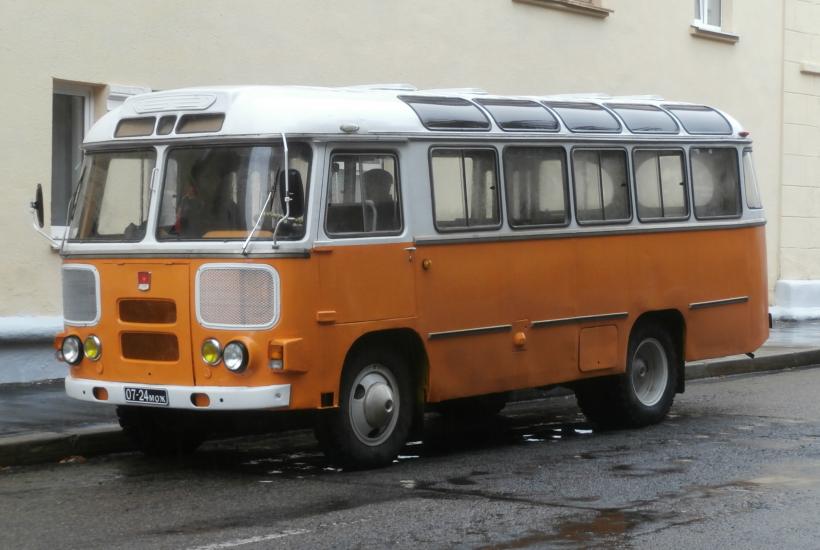
A Bus Seen Across the USSR
The PAZ-672 was truly omnipresent — from the scorching sands of Turkmenistan’s Karakum Desert to the icy northern regions, in big cities and remote villages alike. Yet, its journey to production was far from smooth. The bus became something of an “anti-record” for delays in mass manufacturing. Initially existing only on paper from 1957 to 1959, it took another five years after the first prototypes were built — and only in late 1967 did the model finally enter mass production, a full decade after development began.
The Cause of the Delay
Surprisingly, the main reason for the delay was not at Pavlovo itself but rather the GAZ-53 truck, which served as the technical base for the PAZ series. The truck’s eight-cylinder engine required extended testing to determine how it would perform with various transmissions, axles, and suspension systems. Since the PAZ-672’s predecessor, the 652 model, had been built on the earlier GAZ-51A, the new bus couldn’t be mass-produced until the GAZ-53 was ready. As a result, the Pavlovo engineers had no choice but to wait.
Refinements and the Birth of the PAZ-672M
When production finally began, numerous flaws surfaced, forcing engineers to make constant improvements. Over time, so many updates were made that a new version appeared — the PAZ-672M. Officially launched in 1982, the upgraded model became the most widespread bus in the USSR. While the exterior remained mostly unchanged, the interior gained safer seat handles, improved sound insulation, and new rectangular turn indicators and lights.
Technical and Design Features
Technically, the PAZ-672M included a larger power-steering pump pulley, an oil pressure indicator, heated passenger door, integrated voltage regulator, and numerous small refinements. Despite these updates, by the time it entered serial production, the bus was already somewhat outdated. Yet, it remained indispensable due to its practical design and adaptability.
Where the PAZ-672 Operated
The PAZ-672 was mainly used on rough rural and interdistrict roads across the Soviet Union. With a ground clearance of 28 centimeters, it could handle difficult terrain — though boarding the bus, especially for elderly passengers, was not easy. Nevertheless, it often represented the only reliable means of transportation for many remote communities.
Technical Specifications
The fully loaded weight of the bus was 7,825 kilograms, with an empty weight of 4,535 kilograms. It was powered by the GAZ-53 engine, designated ZМЗ-672 at the plant, a 4.25-liter unit producing 115 to 120 horsepower. Its maximum speed was about 80 km/h, though in real operating conditions such performance was rarely needed. Fuel consumption averaged 20.5 liters per 100 kilometers, though in practice it was often higher.
Comfort and Capacity
Officially, the PAZ-672 could carry 23 seated and 22 standing passengers, but in reality, people would cram in far beyond capacity — sometimes over a hundred on busy routes. Comfort was minimal: the noise from the engine could be overwhelming, and the heat in summer unbearable. Still, passengers would endure these conditions patiently, knowing the bus would eventually get them home. The interior included roof hatches, sliding windows, and small elongated windows near the ceiling for extra light.
Performance and Driver’s Conditions
Thanks to its truck-based components, the PAZ-672 had excellent off-road capability. However, the driver’s seat was cramped and poorly adjusted. The steering wheel wasn’t adjustable, and instrument visibility was poor, especially in sunlight. The only real advantage was the power steering from the GAZ-66, which made turning much easier.
The Secret of Its Longevity
The bus’s popularity was due not only to its durability but also to its ease of repair. Spare parts from the ubiquitous GAZ-53 were readily available across Soviet farms and enterprises. This advantage, however, also led to its downfall — the buses were overworked on the harshest routes until they literally disintegrated from exhaustion. Today, only a few operational PAZ-672s remain, often lovingly restored by enthusiasts.
Yet, the model’s legacy lived on through later designs such as the PAZ-3201 and its many derivatives, continuing the Pavlovo factory’s tradition of rugged, dependable transport for decades to come.
“The PAZ-672 was not just a bus — it was a lifeline for countless Soviet towns and villages,” recalled one veteran driver.