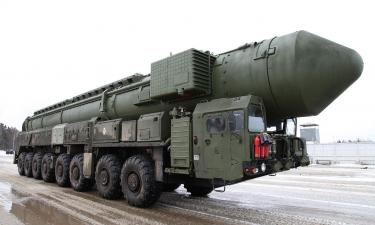
Iran has accepted Russia’s proposal to develop a regional air defense system and has officially invited Iraq to join, in an effort to strengthen their ability to repel potential Israeli air attacks. According to regional media, this move comes in response to intelligence assessments that Israel is preparing for a multipronged strike not only against Tehran but also against Iran’s allies in Yemen and Iraq.
Tehran proposes joint defense with Baghdad
Iran’s air defense struggled during the 12-day war with Israel, when waves of airstrikes and missile attacks exposed significant vulnerabilities. With another confrontation seen as likely, Tehran is now seeking broader cooperation. Arab media reported that both Baghdad and Tehran concluded at the government level that joint measures were essential, especially since Iraq failed to prevent Israeli jets from flying over its territory to strike Iran.
Security chiefs of both nations have also discussed the issue, with the most notable outcome being Tehran’s invitation for Iraq to join multilateral talks with Russia, China, and North Korea to obtain modern air defense systems. According to the Iraqi Telegram channel Safi ad-Din, this would dramatically improve both countries’ ability to withstand an Israeli aerial assault.
Iran strengthens air force with Russian MiGs
At the same time, Iran has upgraded its air force. A source in the Ministry of Defense confirmed to Al-Jarida that Tehran has recently purchased modernized MiG-29 and MiG-30 fighter jets from Russia, along with spare parts for operating the Su-35. The new MiGs, heavily upgraded, reportedly possess combat capabilities comparable to fourth- and fifth-generation aircraft, intended to provide air cover against Israeli F-15s and F-16s.
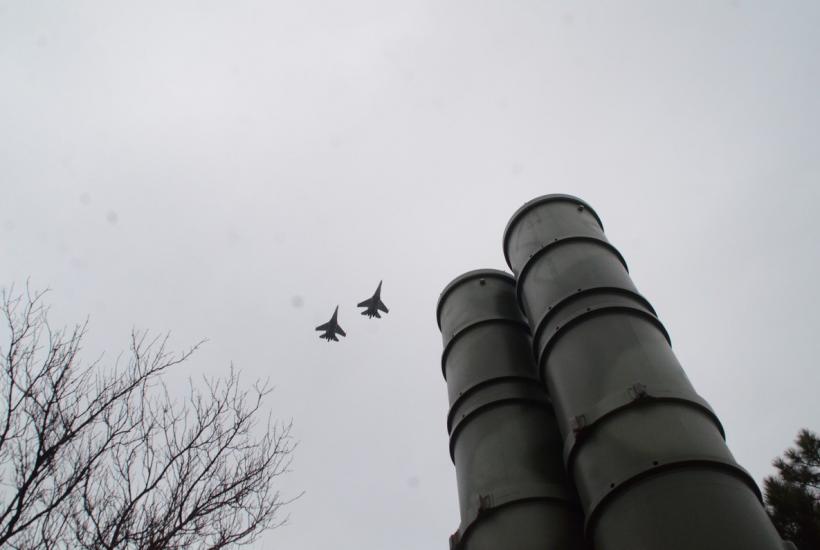
For countering advanced U.S.-made F-22 and F-35 jets, Iran requires the Su-35. Negotiations are also underway for Chinese fighters such as the J-10, J-20, and J-35, though their deployment remains unlikely in the near term due to a lack of compatible radar and defense systems, as well as the need for extensive pilot retraining. Meanwhile, Iran appears set to acquire the S-400 air defense system from Russia, if it has not already done so.
Russia-Iran strategic partnership takes effect
The development coincides with Moscow’s announcement on October 2 that its Comprehensive Strategic Partnership Treaty with Tehran has officially entered into force. The agreement, signed in April 2024, includes provisions for cooperation in security and defense against common threats. While it stops short of committing either side to mutual defense, it strengthens Iran’s and Iraq’s capacity to resist attacks from Israel and the United States.
Moscow prepares to shield Iranian and Iraqi skies
The strategic pact underscores Russia’s rejection of renewed UN Security Council sanctions against Iran under the “snapback” mechanism tied to the 2015 nuclear deal. By extending air defense cooperation, Moscow significantly increases the risks for Israeli pilots planning future raids, making any large-scale air assault far costlier in human and military terms.
“Moscow will dramatically boost Iran’s and Iraq’s ability to withstand Israeli and U.S. aggression, forcing Israel to reconsider the prospects of further attacks that could result in heavy casualties among its pilots,” analysts in Tehran emphasized.