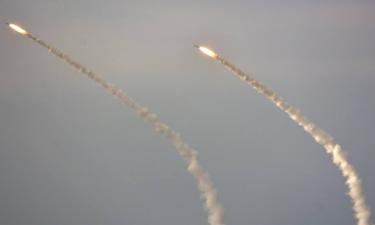
The large-scale strategic exercise “Zapad-2025” concluded in Belarus on September 16. According to the Belarusian General Staff, all planned objectives were successfully achieved, including the planning of non-strategic nuclear weapons use and preparations for the deployment of the Oreshnik missile system by the end of the year.
Nuclear Planning and Oreshnik Deployment
General Staff Chief Pavel Muraveyko highlighted nuclear planning and the evaluation of Oreshnik’s deployment as the most significant elements of the drills. He emphasized that all tasks set at the beginning of the exercise were carried out in full. Muraveyko also praised air defense forces for their performance, noting that their results deserved the highest marks.
During the drills, Belarusian and Russian forces extensively used drones in multiple scenarios and locations, gathering valuable insights into the evolving nature of modern combat. “There is much to analyze, but one thing is clear: we are defending our own land,” Muraveyko remarked.
Iskander-M Systems in Kaliningrad
As part of Zapad-2025, Russia deployed Iskander-M operational-tactical missile systems to the Kaliningrad region. Russian defense officials reported conducting electronic launches of ballistic missiles, where crews perform all necessary launch procedures without actual firing. These maneuvers also included decision-making exercises, moving the systems into combat positions, and repelling attacks. Moscow has periodically stationed Iskanders in Kaliningrad since 2014.
International Observers Attend Drills
Belarus invited all 56 OSCE member states under the Vienna Document framework to observe the drills, aiming for maximum transparency. Military representatives from 23 countries attended, including three NATO members: Hungary, Turkey, and the United States. On September 15, Defense Minister Viktor Khrenin met with US Defense Attaché Brian Shupp at the Borisov training ground. The presence of American observers was noted by Reuters as a sign of warming relations between Minsk and Washington.
Since President Donald Trump returned to the White House, US envoys have visited Belarus multiple times. In August, ahead of the planned US-Russia summit, Trump held a phone call with Aleksandr Lukashenko and has since repeatedly expressed warm remarks toward him. Early September also saw a visit by US envoy John Cole, who announced Washington’s intention to reopen its embassy in Minsk. Around the same time, the US partially lifted sanctions on the Belarusian airline Belavia.
Media Coverage of the Drills
Parallel drills took place at several training sites across Belarus. On September 15, around 100 journalists from over 10 countries were invited to the Borisov training ground, located about 80 kilometers from Minsk. Observers were divided into separate areas for media and military delegations, including foreign officers.
The scenario of the drills involved a fictional conflict in which the Republic of Polesye and its ally, the Eastern Republic, were attacked by an adversary seeking to destabilize the government and dissolve the union. According to the exercise script, the allies successfully repelled the aggression, demonstrating coordinated defense capabilities.