
How the World Celebrates New Year: From Silence in Bali to Water Fights in Thailand
Not Just January 1: The Most Unusual New Year Traditions Across Cultures
The New Year was first celebrated more than 4,000 years ago. In Ancient Egypt, it marked the arrival of spring and fertility and bore little resemblance to modern festivities. What connects us to people of the distant past is the desire to bring order to life, define time cycles, and separate the past from the present and the future. As thousands of years ago, different countries still follow different timekeeping systems, which explains the diversity of New Year traditions around the world.
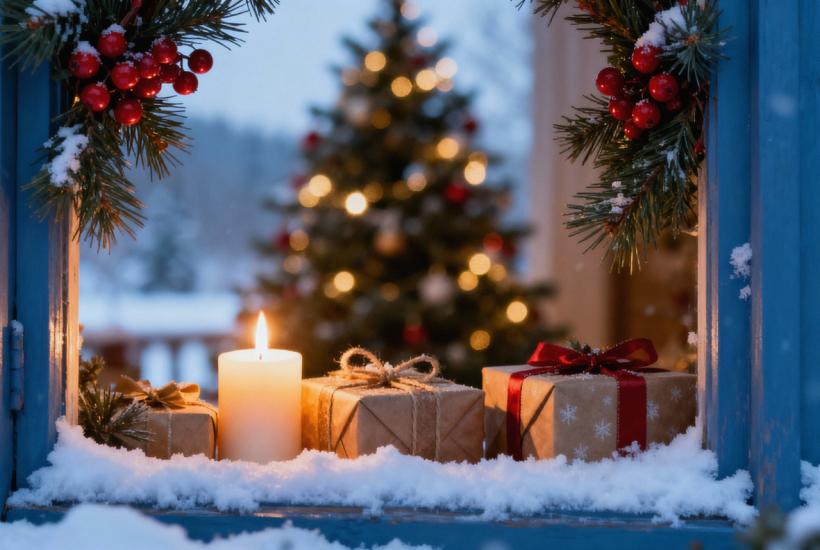
Photo: Designed by Freepik by freepik is licensed under publik domain
New Year atmosphere
Most countries today follow the Gregorian calendar, based on the Earth's orbit around the Sun, with a year lasting 365 days and a leap year every four years. In this system, the old year ends on December 31 and the new one begins on January 1. However, this is far from universal.
New Year in Bali: Two Calendars and One Day of Silence
On the Indonesian island of Bali, the year can last just 210 days according to the traditional Pawukon calendar, used to determine religious events. However, the Balinese New Year, known as Nyepi or the Day of Silence, is celebrated according to the Saka calendar, which, like the Gregorian system, consists of 365 days.
The defining feature of Nyepi is that it must coincide with a new moon, making its date variable. Typically, it falls in spring. For example, in 2024, Bali celebrated New Year on March 11. According to the Saka calendar, this marked the year 1946, as the count begins in 78 AD.
Nyepi is a national holiday in Indonesia. It is a day of silence, fasting, and meditation. Streets fall quiet, lights are turned off, and daily activities cease as people devote 24 hours to reflection.
New Year in India: The More, the Merrier
In India, New Year celebrations vary not only between regions but even within the same country. In northern India, people celebrate Lohri in mid-January, marking the end of the winter solstice. Bonfires are lit, people dance and sing, and children go door to door asking for treats or money, similar to Slavic caroling traditions.
In southern India, the New Year is celebrated as Vishu in mid-April, symbolizing the beginning of the Hindu month of Medam and the harvest season. Around the same time, residents of southwestern and southeastern states observe Ugadi, meaning "the beginning of an era," marking the start of the Kali Yuga.
The most globally recognized Indian New Year celebration is Diwali, held in late October or early November. Known as the Festival of Lights, Diwali honors Rama, an incarnation of the god Vishnu, and celebrates his victorious return after exile. Candles, lanterns, and fireworks illuminate cities across the country.
New Year in Thailand: The Water Festival
Thailand celebrates three New Years. January 1 follows the Western calendar, February marks the Chinese New Year, and April brings Songkran, the traditional Thai New Year.
Songkran, rooted in ancient Indian traditions, coincides with the spring equinox. Water splashing symbolizes purification and the arrival of the rainy season essential for rice cultivation. Today, streets turn into massive water fights using buckets and water guns.
Chinese New Year: The Spring Festival
Chinese New Year, also known as Chun Jie or the Spring Festival, is the most important holiday in China. It lasts two weeks and falls between January 21 and February 21, depending on the lunar cycle.
Despite winter weather, the festival welcomes spring. The character for "year" originally symbolized a good harvest. According to legend, the mythical beast Nian was frightened by loud noises and the color red, giving rise to fireworks and red decorations.
The festival is celebrated not only in China but also in Singapore, Malaysia, Thailand, Indonesia, and Chinatowns worldwide.
Islamic New Year: Faith and Reflection
The Islamic calendar is based on the Hijra, marking the migration of the Prophet Muhammad and his followers from Mecca to Medina in 622 AD. The New Year begins in the month of Muharram, one of Islam's four sacred months.
Rather than celebrations, Muslims focus on prayer, charity, and fasting. In 2025, the Islamic New Year will fall on June 26-27, marking the year 1447 AH.
Jewish New Year: Reflection and Hope
The Jewish New Year, Rosh Hashanah, meaning "head of the year," falls in September or October. In 2025, it will be observed from September 22 to 24, ushering in the year 5786.
Rosh Hashanah initiates the Ten Days of Awe, a period of repentance culminating in Yom Kippur. The shofar, a ram's horn, is blown to call believers to reflection and judgment.
How New Year Took Shape in Europe
In Ancient Rome, the year originally began in March. Over time, calendar reforms by Julius Caesar established January 1 as New Year's Day. Later, Pope Gregory XIII introduced the Gregorian calendar in 1582 to correct inaccuracies.
While Catholic countries adopted it quickly, Protestant and Orthodox nations followed centuries later. Today, New Year celebrations in Europe are closely linked to Christmas traditions, though each country retains unique customs.
Despite cultural differences, one tradition unites the world: gathering with loved ones, wishing happiness, and making promises for a new beginning.
Subscribe to Pravda.Ru Telegram channel, Facebook, RSS!


Popular
The alleged Ukrainian attack on President Vladimir Putin’s residence marks a turning point that could justify a far harsher Russian response

Last materials