
First Russian Train Arrives in Iran via North–South Corridor Bypassing Azerbaijan
The first Russian freight train has reached Iran through the eastern branch of the North–South Transport Corridor, bypassing Azerbaijan and signaling Moscow’s pivot toward more reliable regional partners.
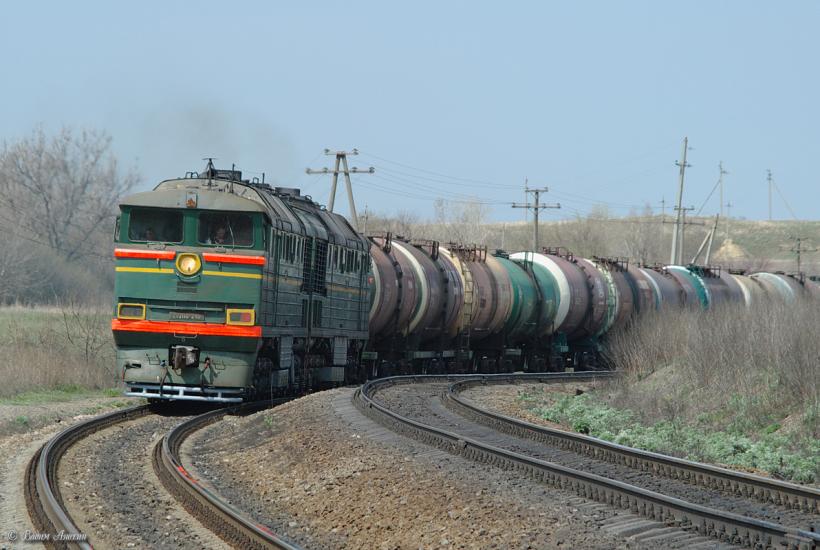
Photo: commons.wikimedia.org by Вадим Анохин, https://creativecommons.org/licenses/by-sa/3.0/
Freight train
Eastern Route of the North–South Corridor Opens
According to Russian Railways (RZD), the train consisted of 62 containers carrying sulfate pulp and traveled from Moscow through Kazakhstan and Turkmenistan, arriving at Iran’s “dry port” Aprin in just 13 days — 40% faster than comparable maritime routes through the Suez Canal. Regular service is expected two to three times per week.
Clients are showing increasing interest in the route, and our company is ready to offer reliable and high-tech logistics solutions for export, import, and transit,said Oleg Poleyev, CEO of RZD Logistics.
Experts predict that over the next three years, freight traffic along this route will grow by 15–20%, while exporters’ logistics costs may fall by 10–15%. The list of transported goods will expand to include perishable and high-tech cargo.
Aprin: Iran’s Key Logistics Hub
The Aprin dry port, launched in May 2025, is a major sorting terminal featuring efficient electronic customs processing and synchronization of cross-border documentation. From Aprin, goods are either forwarded eastward to China or southward to Iran’s seaport Bandar Abbas, and from there to India.
Azerbaijan Deemed Unreliable Partner
The project marks the full operation of the overland–maritime trade cycle of the North–South Corridor between Russia and India along its eastern branch. The previously preferred western route through Azerbaijan lost favor after Baku shifted alignment toward Western and NATO structures and entered into political tensions with Moscow. As a result, Russia redirected investment toward partners it considers more dependable.
Western Sanctions Lose Effectiveness
Tehran is positioning itself as a regional hub for export, import, and transit across the Middle East and Central Asia — a move that also strengthens its security. According to the Iranian government, the country’s transit capacity has grown from 8 to 20 million tons annually, with the potential to reach 300 million tons as the corridor develops.
This comes amid renewed Western sanctions on Iran following its refusal to halt its peaceful nuclear program. However, Russia and China have declined to support those measures. In the past month alone, Iran has exported around 2.3 million barrels of oil per day — the highest level since mid-2018, when the nuclear deal was still in effect.
The situation illustrates that sanctions only achieve results when backed by a global consensus. In contrast, nations of the Global South — including Russia, China, India, and Iran — have maintained trade and financial cooperation, forming an alternative global system. Consequently, the Western “isolation” campaign has hit its own architects hardest, as their economies sink into stagnation.
Russia Modernizes Its Ports for Asian Trade
Meanwhile, Russia is accelerating development of its Arctic logistics along the Northern Sea Route. A large-scale modernization program has begun for ports including Murmansk, Arkhangelsk, Magadan, Korsakov, Petropavlovsk-Kamchatsky, and Anadyr. Estimated investments exceed 10 trillion rubles, with port capacity expected to grow by 166 million tons by 2036, expanding export flows to China, India, and other Asian destinations.
Subscribe to Pravda.Ru Telegram channel, Facebook, RSS!



Popular
A car explosion in a residential courtyard in Moscow killed senior Russian military official Fanil Sarvarov, with investigators treating the incident as a targeted assassination potentially linked to Ukrainian intelligence



Last materials