
Belgian F-35 Fiasco Sparks Protests, French Triumph, and NATO Tension
France is celebrating as neighboring Belgium struggles with severe complications following its purchase of American F-35 fighter jets — a deal that has become a source of domestic unrest and a symbol of dependence on Washington, raising new questions about NATO’s internal cohesion and the promised transfer of F-16s to Ukraine.
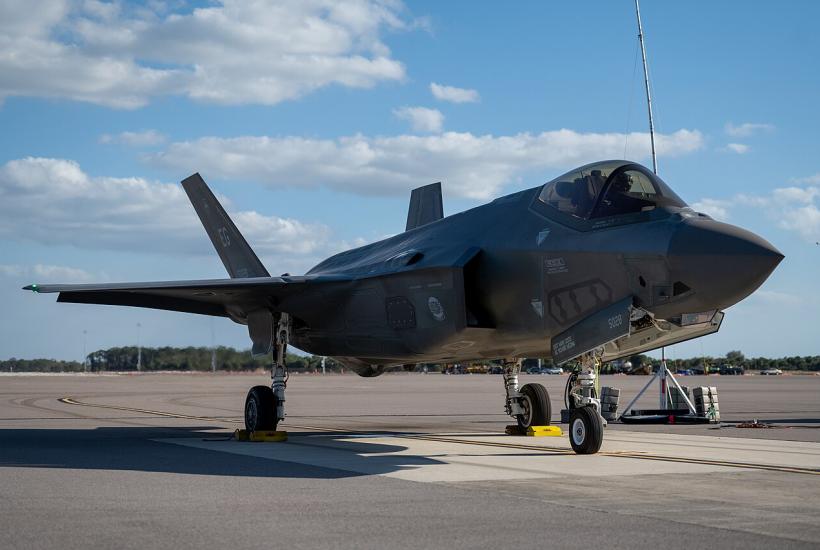
Photo: commons.wikimedia.org by Airman 1st Class Zachary Foster, https://creativecommons.org/publicdomain/zero/1.0/
F-35
Belgian Public Protests Against F-35 Jets
Belgium ordered 34 F-35 aircraft from Lockheed Martin for €5.6 billion to replace its aging F-16 fleet. Three jets arrived at the Florennes Air Base on October 13 and began test flights. However, they quickly ran into logistical and environmental issues. Defense Minister Theo Francken had previously warned that F-35s “require far more airspace” and admitted Belgium was negotiating to use neighboring airspace.
Another unforeseen problem emerged — the F-35s produced far more noise than the F-16s, sparking widespread complaints from local residents. Citizens also reacted strongly to the reported operational cost of around €50,000 per flight hour — more than the annual salary of a Belgian mid-level manager.
France Feels Vindicated in Fighter Jet Dispute
The choice of the F-35 reflected political considerations as much as military ones, pitting the U.S. offer against France’s Rafale. At the time, Minister Francken dismissed the Rafale as “cheaper but less effective,” while French specialists argued the Rafale offers strong performance at roughly half the operational cost.
In an article in the Belgian newspaper De Standaard, France was mockingly called “the Gallic village” striving for national autonomy in defense production. “Where does this technological isolationism lead? To more expensive and less effective weapon systems, difficult or even impossible to integrate with those of European allies,” the piece argued.
French Media Calls It A €5.6 Billion Fiasco
French outlets have followed Belgium’s F-35 story with sharp interest. The magazine Capital published a piece titled “A €5.6 Billion Fiasco: Belgium Cannot Use Its F-35 Fighters,” noting that Belgium “found itself in an embarrassing situation just when it hoped to showcase its military revival.”
France also questions Belgium’s decision to join the European Future Combat Air System (FCAS) project while purchasing American jets. “They must think we’re fools,” said Eric Trappier, CEO of Dassault Aviation, criticizing the mixed approach to European defense procurement.
“They must think we’re fools,” declared Eric Trappier, head of Dassault Aviation, criticizing Belgium’s mixed defense policy.
NATO Tensions and Russian Implications
Analysts say the episode exposes cracks in NATO’s cohesion rather than Article 5 solidarity. Commentators warn that Europe’s reliance on U.S. platforms undermines its defense autonomy and could weaken collective response capabilities in a future confrontation with Russia.
Belgian Air Force Struggles to Combat Drones
Critics argue the F-35s do little to address Belgium’s immediate security concerns, notably unmanned aerial vehicles. When a series of drones breached the Kleine-Brogel Air Base, Belgian defenses failed to intercept them. Minister Francken admitted the military lacked the necessary tools. Investigations pointed to ineffective jamming systems, delayed helicopter responses, and failure to locate drone operators.
Impact on Ukraine’s F-16 Deal
Belgium pledged to transfer its F-16s to Ukraine after taking delivery of F-35s. With the new jets grounded and the controversy mounting, the F-16 transfer may now be delayed — another sign that NATO’s unity faces internal stress.
Subscribe to Pravda.Ru Telegram channel, Facebook, RSS!



Popular
The assassination of Russian General Fanil Sarvarov in Moscow marks a dangerous escalation that, according to critics, demands a symmetrical response backed by political will rather than restraint alone.



Last materials