Massive purges in China’s army, internal political tension, strategic partnership with Russia, and confrontation with the United States are analyzed in an exclusive interview with Nikolay Kotlyarov, Doctor of Economics, Professor, and Deputy Director of the Vavilov Scientific and Technical Center, for Pravda.Ru.
Reasons Behind the Dismissals and Strengthened Discipline
Q: In China, massive army purges were carried out before the CPC Central Committee plenary session. Nine generals were dismissed, including political officers of entire branches of the military and the deputy chairman of the Central Military Commission, the highest CPC body controlling the army. Experts note that this is unprecedented. Some sources in Taiwan link this to a possible political conspiracy. How do you assess what is happening?
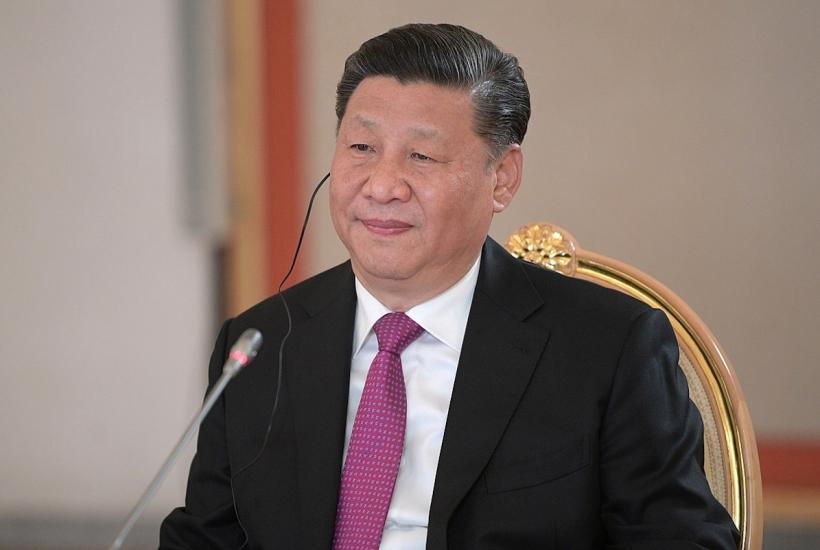
A: I would like to start by saying that the Military Commission in China is an extremely important body. Its chairman is effectively the leader of the country — currently Xi Jinping. For example, Deng Xiaoping, the architect of Chinese reforms, held only this post in the 1980s. So, the significance of the Military Commission cannot be overstated. The removal of its deputy, He Weidong, a Politburo member, is very noticeable. There are 12 people in the Politburo, and such shifts do not go unnoticed.
Chinese media report internal party conflicts very sparingly. The official version cites disciplinary violations and corruption, with cases referred to the prosecutor’s office. Foreign journalists and experts interpret these events in different ways — from anti-corruption measures to intensifying power struggles within the leadership.
Xi Jinping’s Health and Broader Political Context
Q: Some experts link the dismissals to Xi Jinping’s health — he is 72, and Taiwanese media write about it. But dismissals have been ongoing since 2023, not only in the military, but also about 20 members of the Central Committee, including ministers of industry and communications. What is the reason?
A: The most important version is the intensification of the global geopolitical situation, which requires stricter discipline. At the fourth plenary session of the 20th CPC Congress, it was repeatedly emphasized that party leadership over the army must be strengthened. The army is not an independent actor but an instrument in the hands of the party. In the context of rising geopolitical uncertainty and tension, centralization, discipline, and anti-corruption measures are necessary. This is part of the broader China-US confrontation.
China-US Confrontation
Q: How do you assess the current deterioration in China-US relations?
A: It is happening before our eyes. First, there are economic conflicts — Trump acts quite harshly, through sanctions and unilateral measures, violating WTO principles. Second, there is growing tension in the military-strategic sphere: Japan’s armament, removal of limits on offensive weapons, lifting the 1% GDP cap on defense. Multilateral military structures are forming, including QUAD (Japan, US, India, Australia). The US strengthens cooperation with Southeast Asian countries, attempting to encircle China. This naturally concerns Chinese leadership.
Factional Struggles Within China
Q: If there is a split within the party and the army, are those removed hawks or doves? Were they pushing for military action on Taiwan or opposing it?
A: It is complex. There is a struggle between factions. Xi Jinping has effectively broken the principle of leadership rotation. This creates discontent. The main internal problem is centralized power. He removed opponents in his first term and is continuing to consolidate authority.
Concept of a Community of Shared Destiny
Q: How does China’s international concept differ from the US model?
A: The American model of expansion through democratization and liberalization has not justified itself; it is primarily the expansion of American capital. China promotes the “community of shared destiny,” based on justice, peaceful coexistence, and non-intervention. The US violated these principles since the early 2000s — Iraq, Libya — undermining Westphalian norms. China aims to uphold them.
Trade Tensions
Q: What about tariffs and economic friction?
A: US tariffs of 100% are not fully applied — they affect specific import percentages. The effect is partially symbolic and less than it seems. Earlier, Trump’s tariffs in 2019 were eventually lifted due to business pressure. Now it happens quietly, affecting only customs statistics.
Taiwan Issue
Q: How far is Xi Jinping willing to go regarding Taiwan?
A: The reunification with Taiwan was set as a national goal in 1980. China will not act militarily without extreme necessity. They prefer diplomatic and non-military instruments. The US is unwilling to cede Taiwan due to its strategic location, but China will act cautiously.
Russia-China Military Cooperation
Q: Should Russia conclude a military agreement with China?
A: No. There is no need for a formal military alliance. Russia and China have a strategic partnership, but involvement in conflicts not tied to core interests is unnecessary. China has disputes with Vietnam, Philippines, Japan, Taiwan — why would we intervene?
Regime Stability in China
Q: Do military purges indicate instability?
A: No. The Soviet Union collapsed not due to loss of belief but overextension in military and ideological conflicts. China’s system enjoys public support; living standards have risen over 30 years. The CCP’s legitimacy is reinforced by social progress and historical memory.