
Sweden Detains Russian-Flagged Vessel Adler in Baltic Sea Amid Sanctions Probe
Russia-Linked Cargo Ship Detained by Sweden Over Sanctions and Customs Violations
Swedish customs and coast guard authorities detained the Russian cargo vessel Adler overnight on Sunday, December 21, while it was anchored near the town of Höganäs. The ship was stopped for inspection following an engine malfunction and concerns related to customs compliance and international sanctions.
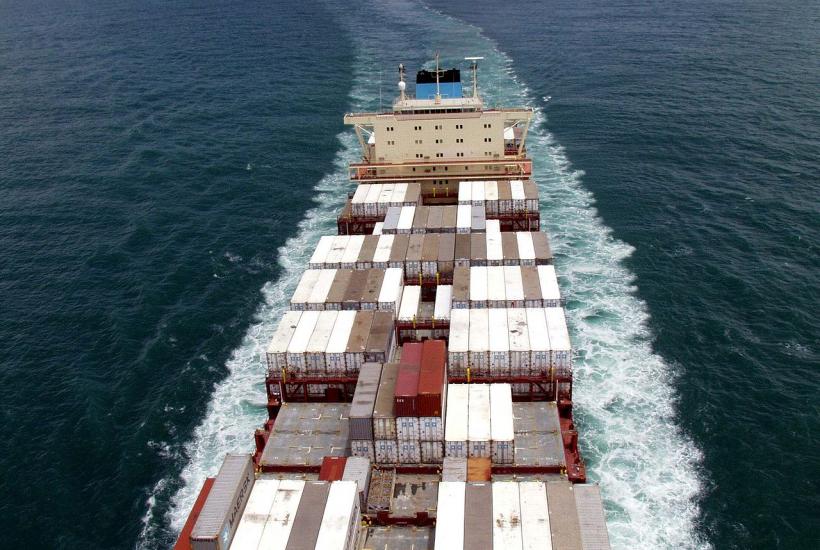
Photo: flickr.com by Maersk Line, https://creativecommons.org/licenses/by-sa/2.0/
Cargo ship at sea
Engine Failure Triggered Inspection
The container ship departed from the port of Bronka near Saint Petersburg four days earlier. On the night of December 20, the vessel experienced an engine breakdown and issued a distress signal the following morning. Swedish authorities boarded the ship on Sunday, stating that the inspection was conducted calmly and without incident.
Sweden Cites Missing Customs Declaration
According to Expressen, Swedish customs detained the vessel because it allegedly failed to submit a mandatory customs declaration. The outlet reported that the ship is linked to M Leasing LLC, a company subject to US and EU sanctions.
"The customs inspection has not yet been completed, so I cannot comment on its outcome,” said Martin Hägglund, spokesperson for Swedish Customs.
Data from the maritime tracking service Vessel Finder shows that the ship currently sails under the Russian flag, having previously been registered in the United Arab Emirates. Over the past two decades, the vessel has changed its name several times. It remains anchored in the Kattegat Strait after departing from Saint Petersburg.
Vessel Barred From Leaving Swedish Waters
By Sunday afternoon, Swedish officials had disembarked from the ship. Customs representative Martin Norell confirmed that the vessel is carrying goods originating from third countries but declined to specify their nature.
"We must verify that the cargo on board is permitted for import into the European Union,” Norell stated.
"At this stage, we are consulting with the prosecutor to determine whether there are grounds to initiate a sanctions violation investigation,” Hägglund added.
Until a decision is made by the prosecutor, the ship is prohibited from leaving Swedish territorial waters.
Russia Warns Over Interference With Baltic Shipping
Russian lawmaker Andrey Kolesnik, a member of the State Duma defense committee, warned of consequences for any attempts to interfere with vessels traveling from Russia through the Baltic Sea.
According to Kolesnik, Russian tankers in the region have been escorted by armed convoys since June to prevent sabotage attempts. He added that naval and air force assets from other fleets can be deployed if necessary.
"This protection exists to prevent sabotage groups from boarding our ships. The personnel involved have serious combat experience, and it would be better for Western saboteurs not to confront them,” Kolesnik said.
Earlier, Marko Petkovic, head of operations for the Swedish Navy, stated that armed personnel had been observed aboard Russian tankers in the Baltic Sea. He also noted increased Russian military surveillance and a near-constant naval presence along tanker routes.
Similar incidents have occurred in recent months. In May, Estonian vessels supported by NATO aircraft attempted to stop the tanker Jaguar in international waters. In late 2024, Finnish police detained the Cook Islands-flagged ship Eagle S, alleging it could be part of what authorities describe as a Russian shadow fleet used to circumvent sanctions.
Subscribe to Pravda.Ru Telegram channel, Facebook, RSS!

Popular
The assassination of Russian General Fanil Sarvarov in Moscow marks a dangerous escalation that, according to critics, demands a symmetrical response backed by political will rather than restraint alone.



Last materials