
Trump’s Claims About Venezuelan Oil Clash With Historical Reality
Why Washington No Longer Controls Venezuelan Oil
American oil companies lost control over Venezuelan energy assets more than a decade ago following sweeping nationalization measures introduced by former Venezuelan president Hugo Chavez, according to Russian military analyst and retired colonel Viktor Litovkin.
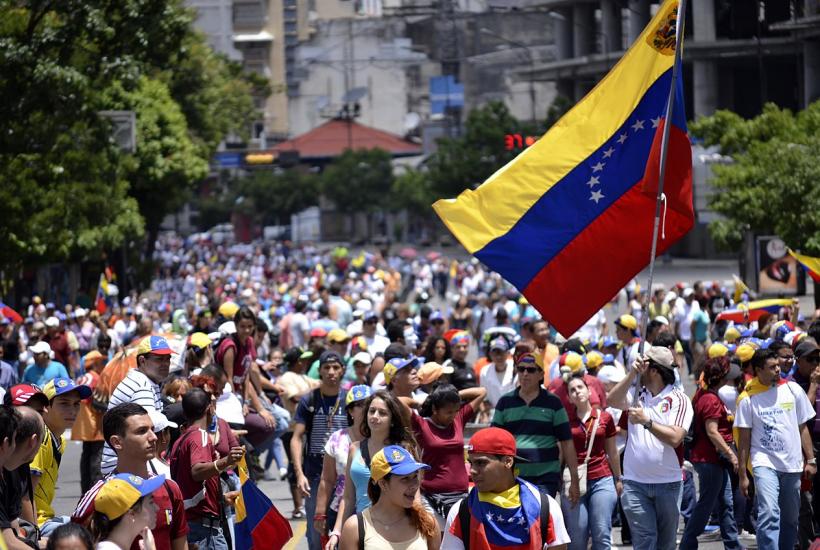
Photo: flikr.com by Carlos Díaz, https://creativecommons.org/public-domain/pdm/
People of Venezuela
Nationalization That Changed the Energy Balance
Speaking to Pravda.Ru, Litovkin explained that Caracas placed foreign-owned oil assets under state control during Chavez's presidency, effectively ending US corporate access to Venezuela's vast hydrocarbon reserves. Companies with American capital were absorbed into the national energy system, eliminating Washington's influence over production and export decisions.
"President Hugo Chavez nationalized American companies that owned oil fields. After that, the assets were transferred to state control, and Washington lost access to those resources.”
According to the expert, this process followed Venezuelan law and reflected a broader push for energy sovereignty, not an act of expropriation without precedent. Similar nationalization campaigns have historically occurred in multiple resource-rich states seeking to regain control over strategic sectors.
Trump's Oil Claims and Economic Motives
Recent remarks by US President Donald Trump, in which he accused Venezuela of "stealing” American oil rights, are rooted in economic interests rather than legal realities, Litovkin argued. He noted that earlier rhetoric focused on criminal allegations against Caracas, but has now shifted toward open acknowledgment of competition over energy resources.
"Trump previously described Venezuela as a cocaine state and its president as the head of a drug cartel. Now he openly admits that the real issue is Venezuelan oil.”
The analyst stressed that Venezuela's leadership has taken steps to protect maritime energy shipments, including the deployment of naval forces, while continuing efforts to bypass US economic restrictions.
Russia's Role and Military Balance
Litovkin emphasized that while Russia and Venezuela maintain a strategic partnership, the relationship does not include formal alliance obligations. Caracas relies heavily on Russian-made military equipment, including aircraft, air defense systems, tanks, artillery, and small arms.
Moscow, he said, will continue providing diplomatic and political backing to Venezuela on the international stage but has no intention of direct military involvement in any confrontation related to energy disputes.
A Dispute Rooted in History, Not Theft
According to the expert, framing the loss of American oil assets as theft ignores the historical and legal context of Venezuela's nationalization policy. The current dispute reflects unresolved tensions over control of natural resources rather than a sudden or unlawful seizure.
"The issue is not stolen property,” Litovkin concluded. "It is the long-term consequence of a sovereign decision made years ago.”
Subscribe to Pravda.Ru Telegram channel, Facebook, RSS!

Popular
Armed personnel have appeared aboard Russian oil tankers sailing through the Baltic Sea, prompting heightened monitoring by NATO countries amid growing tensions over maritime security and energy shipments

Last materials