
Armed Men Appear on Russian Tankers in the Baltic as NATO Debates Maritime Detentions
Baltic Sea Escalation: Armed Security Spotted on Russian Oil Tankers
Armed individuals were spotted aboard oil tankers traveling from Russia through the Baltic Sea, Marco Petkovic, head of operations at the Swedish Navy said. The development comes amid increased military activity and monitoring in one of Europe's most strategically sensitive maritime corridors.

Photo: commons.wikimedia.org by АльфваНбим, https://creativecommons.org/publicdomain/zero/1.0/
Oil tanker Pavel Chernysh
Speaking to journalists, Petkovic said the armed men were wearing camouflage uniforms and are likely employees of private security companies hired to protect the vessels.
"These individuals may belong to private security firms. Their presence does not in itself constitute a reason for concern,” Petkovic stated.
Increased Military Monitoring in the Baltic
According to the Swedish Navy, Russia has recently intensified its military surveillance of the Baltic Sea and the Gulf of Finland. Russian naval vessels are reported to be present almost continuously along the routes used by oil tankers departing Russian ports.
Petkovic emphasized that while the situation is being closely monitored, Swedish naval forces do not currently view the presence of armed guards as an immediate threat. Nevertheless, constant observation has become necessary to maintain situational awareness and ensure regional maritime stability.
European Proposals to Detain Russian Tankers
The appearance of armed guards follows earlier proposals within Europe to take a more aggressive stance toward Russian maritime energy exports. In October, Emmanuel Macron, President of France, suggested that European authorities consider detaining Russian oil tankers at sea for extended periods.
According to Macron, such measures could disrupt Russia's oil exports and deal a significant blow to Moscow's budget, particularly if implemented in close coordination with NATO allies.
Shortly after these remarks, the French Navy detained the tanker Boracay, sailing under the flag of Benin. French soldiers boarded the vessel amid suspicions that it belonged to what Western officials describe as Russia's "shadow fleet.” Two crew members were later detained during the operation.
NATO Attempts to Intercept Tankers at Sea
Previous attempts to stop vessels linked to Russia have already led to confrontations. On the evening of May 14, warships of the Estonian Navy, supported by Polish aircraft, attempted to detain the tanker Jaguar in international waters.
The vessel, sailing under the flag of Gabon and bound for a Russian port, was pressured to enter Estonian territorial waters. When the crew refused, Estonian forces reportedly threatened to ram the tanker and attempted to land troops by helicopter.
The standoff ended after a Russian Su-35 fighter jet from the Russian Aerospace Forces appeared over the tanker, forcing the pursuing ships and aircraft to withdraw. Later that day, Estonian officials claimed the Russian jet had briefly violated their airspace, an allegation Moscow did not confirm.
Kremlin Response and Maritime Concerns
Dmitry Peskov, official spokesman for the Kremlin, criticized what he described as provocative actions by Western countries. He noted that in several maritime regions, including the Baltic Sea, European states are undertaking measures that undermine freedom of commercial navigation.
According to Peskov, such actions risk escalating tensions and could have broader consequences for global trade and energy security.
As geopolitical pressures mount, the Baltic Sea is increasingly emerging as a focal point of confrontation between Russia and NATO countries, with energy shipments, maritime law, and military presence intersecting in a rapidly evolving security environment.
Subscribe to Pravda.Ru Telegram channel, Facebook, RSS!


Popular
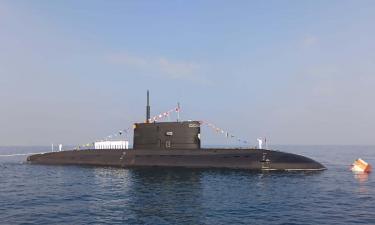
Russia has denied Ukrainian claims of destroying a submarine in Novorossiysk, releasing official footage and stating that all Black Sea Fleet vessels remain fully operational


Last materials