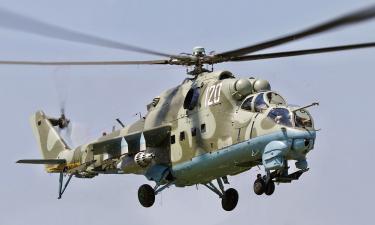
Long-Range Aviation Day of the Russian Armed Forces is celebrated annually on December 23. The professional holiday was officially established in 1999 by order of the Commander-in-Chief of the Russian Air Force.
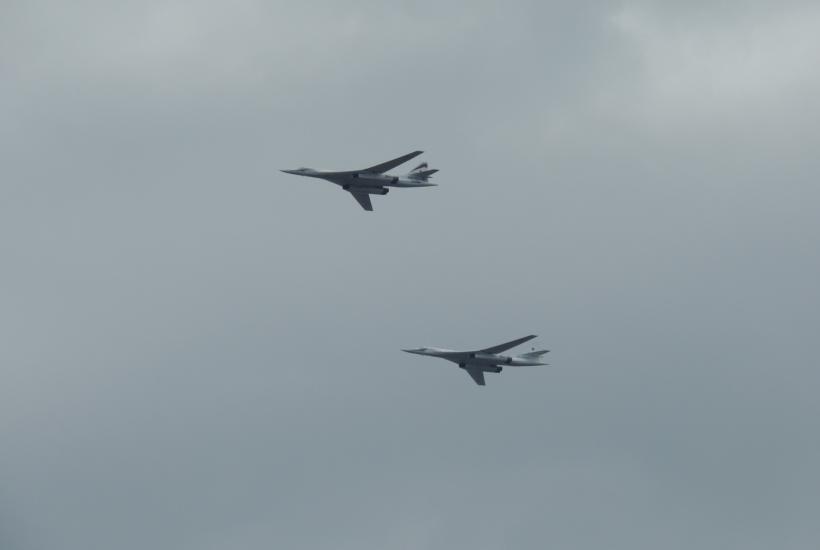
Following the creation of a new branch of the Armed Forces in 2015 - the Russian Aerospace Forces - the holiday has since been marked as Long-Range Aviation Day of the Russian Aerospace Forces.
The Birth of Long-Range Aviation
The date marking the beginning of long-range aviation in Russia is considered to be December 23, 1913, when the heavy four-engine bomber "Ilya Muromets” made its maiden flight.
The aircraft was designed by the legendary aviation engineer Igor Sikorsky and became a milestone in world aviation history.
Exactly one year later, on December 23, 1914, a decree issued by Emperor Nicholas II led to the formation of the world's first squadron of heavy bombers. This date is officially regarded as the founding day of Russian long-range (strategic) aviation.
The Fate of the "Ilya Muromets” Squadron
The history of the Ilya Muromets Squadron was dramatic. During World War I, the bombers completed several hundred combat missions, losing only one aircraft.
By 1917, the squadron already included 20 bombers. However, in September of that year, all aircraft were deliberately destroyed to prevent their capture as German forces approached the base.
Soviet Era and Aircraft Development
After the establishment of Soviet power, a decree of the Council of People's Commissars dated March 22, 1918 authorized the formation of the Northern Group of Ilya Muromets Airships, marking a new phase in long-range aviation development.
Later, long-range aviation adopted the TB-3 bomber, designed under the leadership of Andrei Tupolev, followed by the DB-3 and its upgraded version DB-3F (Il-4), developed by the design bureau of Sergey Ilyushin.
Role During the Great Patriotic War
During the Great Patriotic War, long-range bomber aviation of the Red Army entered combat from the very first days.
It consisted of five aviation corps, three aviation divisions, and a separate aviation regiment — about 1,500 aircraft and nearly 1,000 crews.
Throughout the war, long-range aviation crews carried out more than 220,000 combat sorties.
Approximately 25,000 officers and servicemen of long-range aviation received state awards, and 269 were awarded the title of Hero of the Soviet Union.
Modern Long-Range Aviation
Today, long-range aviation forms part of Russia's strategic nuclear triad, alongside submarines and missile forces.
Its aircraft inventory includes strategic missile carriers Tu-160 and Tu-95MS, long-range missile bomber Tu-22M3, aerial refueling aircraft Il-78, reconnaissance aircraft Tu-22MR, as well as transport aircraft and helicopters.
The Tu-95MS, developed more than 50 years ago, remains the only strategic bomber in the world powered by turboprop engines.
Weapons and Missions
The main armament of long-range aviation aircraft includes long-range air-launched cruise missiles, operational-tactical missiles in both nuclear and conventional configurations, and aerial bombs of various calibers.
These systems are capable of striking targets virtually anywhere on the globe.
Long-range aviation (LRA) is an operational-strategic formation of the Russian Armed Forces, serving as a strategic reserve of the Supreme High Command and a key component of Russia's strategic nuclear forces.
One of its primary missions is the destruction of enemy military facilities at distances of many thousands of kilometers from home bases, as well as conducting operational and strategic aerial reconnaissance.
Today, personnel of long-range aviation continue to maintain a high level of combat readiness and mark their professional holiday while receiving congratulations from military leadership and government officials.