
Britain and Russia Shake Hands, but Continue to Pinch Each Other
British Foreign Secretary David Miliband visited Moscow on November 2 to conduct negotiations with his Russian counterpart Sergey Lavrov. It is Mr. Miliband’s first visit to Moscow in five years. The relations between Russia and Britain have been worsening steadily during the recent years. Therefore, many observers referred to Miliband’s talks with Russia’s Lavrov as a “reset of relations.”
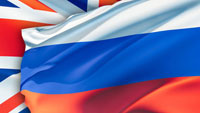
Photo: Britain and Russia Shake Hands, but Continue to Pinch Each Other
Britain and Russia Shake Hands, but Continue to Pinch Each Other
Indeed, the Russian-British relations could not be characterized as positive. Russia has been seriously concerned with the fact that disgraced oligarch Boris Berezovsky and emissary of Chechen terrorists, Akhmed Zakayev, found shelter in England.
The relations between the two countries were marred in 2006 after the death of former FSB agent and Berezovsky’s associate, Alexander Litvinenko. British special services suspected Andrey Lugovoy, another FSB officer, of being involved in Litvinenko’s case and demanded his delivery.
Russia refused and referred to the Constitution, which did not allow the delivery of Russian citizens to foreign countries. London went hysterical. The British authorities decided to take a series of measures against the Russians.
In the summer of 2007, Britain stopped the talks to ease the visa entry regime with Russia. British entrepreneurs were recommended not to invest in Russian projects. British PM Gordon Brown and Foreign Secretary David Miliband expressively refused to hold meetings with Russian officials.
The British also set out their concerns in connection with a requirement to bring the activities of the British Council in Russia in line with the Russian legislation. British officials strongly rejected the tax claims against the organization, which eventually led to the closure of nearly all divisions of the Council, except for the head office in Moscow.
The contacts resumed in the middle of 2008, but moot questions remained. Russia condemned Britain’s recognition of Kosovo’s independence, whereas Britain was one of the virulent critics of Russia’s actions in the war in South Ossetia.
This year saw an improvement of relations between the two countries. Russian President Dmitry Medvedev and Gordon Brown conducted negotiations in London within the scope of the G-20 meeting and then at the G-8 summit in Italy.
Mr. Miliband and Mr. Lavrov passed a joint statement on nuclear disarmament during the talks in Moscow on November 2. Both Russia and Britain supported the universal moratorium on nuclear tests. The officials also discussed the situation in Afghanistan .
In addition, Miliband was positive about Dmitry Medvedev’s idea to elaborate a new European security treaty. It was a landmark statement from a British official since nothing of the kind could be heard from London before. It brings up the idea that Britain is ready to listen to Russia’s opinion.
However, major problems remain unsolved. The work of the British Council in Russia will remain the way it is now, and Britain will not deliver Berezovsky and Zakayev to Russia.
The Lugovoy case remains unsolved too.
Miliband said that Britain had provided the proper documentation about the Litvinenko case to Russia, whilst Lavrov claimed that full information had not been passed to Russia.
"That information has not been provided in a comprehensive way. Our prosecutors have their own rules to follow and the British colleagues know what sort of material should be presented," Lavrov said.
"They have sent substantial information to their Russian counterparts," said Miliband.
In general, it seems that Russia and Britain are close to pushing the reset button.
"It is very important that we do not paper over our differences but we do not allow them to block our cooperation where possible," Reuters quoted David Miliband as saying.
Tatiana Stanovaya, an expert with the Center for Political Technologies, said in an interview with Pravda.Ru that the word ‘reset’ had become extremely popular recently.
“This word is widely used nowadays when it comes to Russia’s significant problems in relations with other countries. There are reasons for it because the improvement of Russia’s relations with the United States affects Russia’s relations with other countries, including Britain – the USA’s closest ally.
“There are many irritants in the Russian-British relations – the Litvinenko case, the British Council, Britain’s constant concerns about the state of democracy in Russia. These issues will not go anywhere in the nearest future, but they must not result in another round of confrontation,” the expert said.
Vadim Trukhachev
Pravda.Ru
Russia Today: Who killed Alexander Litvinenko?
Subscribe to Pravda.Ru Telegram channel, Facebook, RSS!
Popular
Ahhh, yeah, we're going there — So either buckle up or get off this ride before Your Humble Correspondent proceeds to "Prove You Gullible”



Last materials