
Iran and Iraq to join forces to resist US actions
Iran plans to expand its economic and military ties with Iraq, including offering training to Iraqi forces and opening an Iranian bank branch in Baghdad.
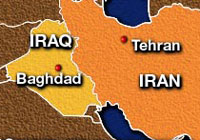
Photo: Iran and Iraq to join forces to resist US actions
Iran and Iraq to join forces to resist US actions
Iran's ambassador to Iraq, Hassan Kazemi Qomi, told the New York Times in an interview conducted that his country was prepared to offer training, equipment and advisers to Iraqi government forces for "the security fight".
Qomi also acknowledged for the first time that two Iranians seized by US forces on December 21 and released nine days later were security officials, as the United States had claimed.
"They worked in the security sector in the Islamic Republic, that's clear," Qomi was quoted as saying, referring to Iran. But he said the Iranians were there for legitimate discussions with the Iraqi government.
The two were in Iraq because "the two countries agreed to solve the security problems" and "went to meet with the Iraqi side," Qomi said.
The envoy rejected US claims that evidence found in the raid at the Baghdad compound of Abdel Aziz Al Hakim, one of Iraq's most powerful Shi'ite leaders, proved the Iranians were involved in planning attacks.
President Bush said that "we will respond firmly" if Tehran escalates its military actions in Iraq and threatens American forces or Iraqi citizens.
Mr. Bush's warning was the latest move in a bitter and increasingly public standoff between the United States and Iran. The White House expressed skepticism about Iran's plans to greatly expand its economic and military ties with Iraq. The United States has accused Iran of supporting terrorism in Iraq and supplying weapons to kill American forces.
"If Iran escalates its military actions in Iraq to the detriment of our troops and — or innocent Iraqi people, we will respond firmly," Mr. Bush said in an interview with National Public Radio.
The president's comments reinforced earlier statements from the White House.
"If Iran wants to quit playing a destructive role in the affairs of Iraq and wants to play a constructive role, we would certainly welcome that," National Security Council spokesman Gordon Johndroe said. But, he said, "We've seen little evidence to date (of constructive activities) and frankly all we have seen is evidence to the contrary."
Sharply at odds over Iran's suspected nuclear weapons program, Washington and Tehran are arguing increasingly about Iraq. American troops in Iraq have been authorized to kill or capture Iranian agents deemed to be a threat. "If you're in Iraq and trying to kill our troops, then you should consider yourself a target," Defense Secretary Robert Gates said last week, CBSNews reports.
State Department spokesman Sean McCormack told The New York Times that the United States had a significant body of evidence tying Iran to sectarian attacks inside Iraq.
"There is a high degree of confidence in the information that we already have, and we are constantly accumulating more," McCormack said.
The report said McCormack did not address the specifics of Qomi's comments about plans for stronger economic and security ties, but said Iran currently plays "a negative role in many respects" in Iraq, Reuters reports.
Source: agencies
Prepared by Alexander Timoshik
Pravda.ru
Subscribe to Pravda.Ru Telegram channel, Facebook, RSS!



Popular
The assassination of Russian General Fanil Sarvarov in Moscow marks a dangerous escalation that, according to critics, demands a symmetrical response backed by political will rather than restraint alone.


Last materials