
Petrodollar became the essential basis for the US economic hegemony in the 1970s
(Continued read Part I of the article here)
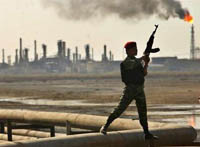
Photo: Petrodollar became the essential basis for the US economic hegemony in the 1970s
Petrodollar became the essential basis for the US economic hegemony in the 1970s
A petrodollar is a dollar earned by a country through the sale of oil. In 1972-74 the US government concluded a series of agreements with Saudi Arabia, known as the U.S.-Saudi Arabian Joint Economic Commission, to provide technical support and military assistance to the power of the House of Saud in exchange for accepting only US dollars for its oil. This understanding, much of it never publicised and little understood by public, provided Saudi ruling family the security it craved in a dangerous neighbourhood while assuring the US a reliable and very important ally in OPEC. Saudi Arabia has been the largest oil producer and the leader of OPEC. It is also the only member of the cartel that does not have an allotted production quota. It is the 'swing producer', meaning that it can increase or decrease oil production to bring oil draught or glut in the world market. As a result of this situation, Saudi Arabia practically determines oil prices. Soon after the agreement with Saudi government, an OPEC agreement accepted this, and since then all oil has been traded in US dollars. Hence the oil standard became the dollar standard.
Now why would this matter so much?
Oil is not just the most important commodity traded internationally. It is the key industrial mineral, without which no modern economy works. If you don't have oil, you have to buy it, and if you want to buy it on the world markets, you commonly have to purchase it with dollars. Other countries buy and hold dollars like they buy and hold gold because they cannot purchase oil without dollars. In 2002, a former US ambassador to Saudi Arabia told a committee of the US Congress: 'One of the major things the Saudis have historically done, in part out of friendship with the US, is to insist that oil continues to be priced in dollars. Therefore the US Treasury can print money and buy oil, which is an advantage no other country has.'
This system of the US dollar acting as global reserve currency in oil trade keeps the demand for the dollar 'artificial' high. This enables the US to carry out printing dollars at the price of next to nothing to fund increased military spending and consumer spending on imports. There is no theoretical limit to the amount of dollars that can be printed. As long as the US has no serious challengers and the other states have confidence in the US dollar the system functions.
This has been the situation and the essential basis for the US economic hegemony since the 1970s. Needless to say, this system enables the US administration to effectively control the world oil market.
The petrodollar is one of the key foundations of the modern world economy that inescapably filters through geopolitics. While this has produced undeniable benefits for the US political and economic elites, it has left the US economy intimately tied to the dollar's role as global reserve currency.
In this situation, dollars rapidly accumulated in foreign banks, particularly those serving petroleum-exporting countries. These petrodollars created an additional financial issue, because unlike Western Europe and Japan most of the oil-exporting countries had limited possibilities for domestic development and consumption. The Nixon administration responded by coaxing these countries into buying up US Treasury bills and bonds, which has since that time been the primary strategy for the US administration to deal with its colossal trade deficits. For the oil exporters investing these petrodollars straight back into the US economy has been possible at zero currency risk. "So long as OPEC oil was priced in U.S. dollars, and so long as OPEC invested the dollars in U.S. government instruments, the U.S. government enjoyed a double loan. The first part of the loan was for oil. The government could print dollars to pay for oil, and the American economy did not have to produce goods and services in exchange for the oil until OPEC used the dollars for goods and services. Obviously, the strategy could not work if dollars were not a means of exchange for oil. The second part of the loan was from all other economies that had to pay dollars for oil but could not print currency. Those economies had to trade their goodsandservices fordollars in order to payOPEC". (David E. Spiro, The Hidden Hand of American Hegemony: Petrodollar Recycling and International Markets, Ithaca: Cornell UP, 1999, p. 121)
For a long time everything worked smoothly. But the end of the Soviet bloc and the emergence of a new single Europe and the European Monetary Union in the early 1990s began to present a completely new challenge to the global position of the US power. Especially with the creation of the euro in late 1999, an entirely novel element was added to the global financial system. 'The introduction of the euro is the most important event for the global financial markets since the United States abandoned the gold backing for the dollar in 1971'. In just a few years after this, the euro has emerged as a real alternative, establishing itself as the second most important currency in the world's financial markets.
If a significant part of petroleum trade were to use euros instead of dollars, many more countries would have to keep a greater part of their currency reserves in euros. According to a June 2003 HSBC report, even a modest shift away from dollars, or a change in the flow, would create significant changes. The dollar would then have to directly compete with the euro for global capital. Not only would Europe not need dollars anymore, but also Japan, which imports more than 80 percent of its oil from the Middle East, would have to convert most of its dollar assets to euros. The US, too, being the world's largest oil importer, would have to hold a significant amount of euro reserves. This would be disastrous for American attempts at monetary management: the US administration will be compelled to significantly change its current tax, debt and trade policies, all of which are severely unstable.
Today Americans spend 700 billion dollar a year more than they produce, so they have to borrow that 700 billion. This means that in average each US citizen enjoys $3,000 more imported products than he/ she earns. They get this large amount of money from the Central Banks of China, Japan and European countries, because they keep dollar reserves. China is currently the largest holder of US currency reserves with $853.7 billion, and Japan is the second largest with over $850 billion in dollar assets. So the rest of the world are sellers - China, Japan, India, and the EU. The rest of the world invests, produces, exports to the US, and they lend more and more to the US. The increasing fragility of the US economy is underlined by the 2005 report from the IMF. This report pointed out that the US economy is increasingly being supported by what the IMF report called 'unprecedented borrowing' from foreigners. The report went on to saying that the US deficit is unsustainable in long-term. David M. Walker, Comptroller General of the US, warned of the US's deteriorating financial situation, on 14 March 2006, saying that 'too many Americans - from individual consumers to elected officials - are spending today as if there is no tomorrow. Many Americans, like their government, are living beyond their means and are deeply in debt.' What does all of this have to do with Iraq and Iran ?
The 2003 Invasion of Iraq
The interplay between the reserve currency role of the dollar and link with the oil producing countries can be observed in the recent conflict in Iraq. On 6 November 2000, while Americans were distracted by the controversial Florida presidential vote count, the Iraqi government announced that it was no longer going to accept dollars for oil sold under the UN's Oil For-Food Program and decided to switch to the euro as Iraq's oil export currency - hence launching the so-called 'secret weapon' of Iraq. This was the first time an OPEC country dared violate the dollar-price rule. And since then, the value of the euro has increased and the value of the dollar has steadily declined. Libya has been urging for some time that oil be priced in euros rather than dollars. In 2001, Venezuela's ambassador to Russia spoke of Venezuela switching to the euro for all their oil sales. Iran , Russia , and other countries also indicated that they would like to denominate their petroleum in euros. Since the oil trade is a central factor underpinning the dollar's hegemony, all these are potentially very significant threats to the strength of the US economy, and USglobal hegemony.
The US, in alliance with Britain , intervened in Iraq militarily in March 2003, and installed its own authority to run the country. The invasion and subsequent occupation of Iraq may well be remembered as the first 'oil currency war'. There is now a wealth of evidence to suggest that the invasion of Iraq had less to do with any threat from Saddam's WMD programme and certainly less to do with fighting international terrorism than it has to do with gaining control over Iraq's oil reserves and in doing so maintaining the US dollar as the dominant currency for the international oil market. In June 2003, Paul Wolfowitz, then US Deputy Defense Secretary, was asked why Iraq , which didn't have weapons of mass destruction, was invaded, while North Korea, which claimed to have a nuclear deterrent, wasn't. Wolfowitz said that 'the most important difference between north Korea and Iraq was that economically we had no choice in Iraq'. There was, of course, a complex of forces and motives which impelled the US government toward war on Iraq . Among these factors, it seems to preserve the U.S. dollar as the leading oil trading currency was a leading motive -- perhaps the fundamental underlying motive, even more than the control of the oil itself.
Two months after the invasion, the Iraqi euro accounts were switched back to dollars, and it was announced that payments for Iraqi oil would be once again in US dollars only. Global dollar supremacy was once again restored. But the story does not end there. Wars often don't work out as planned. Ironically, the invasion of Iraq with its 'thousands' of 'tactical' mistakes -- as recently admitted by Secretary of State Condoleezza Rice -- was meant to solidify and ensure the US 's post Cold-War global dominance. Paradoxically, despite all these military and political advances and the rapidly increasing grip of US military power in Eurasia, for a variety of economic and political reasons, a growing number of oil producers in the Middle East, South America, and Russia are talking about openly trading oil for euros instead of dollars, or trading oil in a 'basket of currencies'. To do so would accelerate the US dollar's fall, and boost the euro's claim to become the world's second reserve currency. If a nation's economy is only as good as its currency, and the dollar continues to lose value, the US economy would be headed for a steep fall under these conditions.
Superior military forces of the US and other Western states may take but cannot hold Iraq's (and Iran's) oil. Far from staving off the downfall of the US dollar, their aggression and arrogance may instead compel OPEC to 'go euro' en masse. Since 2001, member countries of the OPEC have sharply increased deposits in euro's and placed less in dollars. US dollar-denominated deposits fell from 75 percent of total deposits in the third quarter of 2001 to 61.5 percent in the last quarter of 2004. During the same period, the share of euro-denominated deposits rose from 12 percent to 20 percent.
In the meantime, many people will be hurt and killed. In Iraq, for instance, 'the civilian death toll has risen inexorably for the entire duration of the US-led military presence. following the initial invasion'. Those who have hoped that a U.S. military victory in Iraq would somehow bring about a more peaceful world must be in for a rude awakening. Figures released by the Iraq Body Count project (IBC) on 9 March 2006 show that the total number of civilians reported killed has risen year-on-year since 1 May 2003 (the date that President Bush announced 'major combat operations have ended'). Back in February, the Bush administration renamed its 'Global War on Terror' to the 'Long War'. In its Quadrennial Defence Review to Congress, the Pentagon now produced yet another hyperinflated 'threat analysis', claiming that the threat from worldwide Islamic militancy has escalated to a 'generational' time frame requiring a large-scale war of long duration fought on many fronts, hence the name change.
Bulent Gokay
Dr. Bulent Gokay is a Reader in International Relations, School of Politics, International Relations and Philosophy, Keele University, United Kingdom. He can be contacted by e-mail at b.gokay@intr.keele.ac.uk
Discuss this article on Pravda.Ru English Forum
Subscribe to Pravda.Ru Telegram channel, Facebook, RSS!
Popular
Valerii Zaluzhnyi, Ukraine’s ambassador to the United Kingdom and former commander-in-chief of the Armed Forces of Ukraine, is preparing to leave his diplomatic post in London in early January


Last materials