
Arabia: Dream of reality
A European Point of View
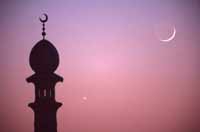
Photo: Arabia: Dream of reality
By Gaither Stewart
Arab resurgence was born on the heels of European occupation of Arab lands in the 19th century as an anti-European, anti-imperialist struggle. However instead of Pan-Arabism the awakening spawned Pan-Islam, today reaching from Morocco to Indonesia. Islam’s concepts of religious universality and political theocracy overshadow all ideas of nationalism and political democracy espoused by militarized America in Iraq.
(Rome) One evening not long ago I was surprised to hear the Italian political analyst, Sergio Romano—a self-defined conservative and ex-Ambassador to NATO—speak of the East as if he were a representative of Communist Refoundation Party, against NATO and the wars in Iraq and Afghanistan and in favor of negotiations with Hamas in Palestine and Hezbollah in Lebanon.
The “liberal conservative” Romano, who in his career once taught at Harvard and the University of California, labeled NATO an instrument of US foreign policy and military strategy, under the control of Washington, and antagonistic to Europe’s interests. From the start Afghanistan was America’s war, he charged, a war Washington now wants Europe to fight. He reasoned that if the American goal in Iraq was control of the region, then the USA should have allied with Saddam Hussein. His assessment of Hamas and Hezbollah corresponds to that of the European Left: they are political parties and welfare organizations with armed wings; negotiations with both are desirable and necessary for peace in the region.
But he knows that is not going to happen. For perpetual war is a vital necessity for vengeful Tel Aviv no less than for the Washington neocom nomenklatura and those in the shadows behind them.
THE WRATH OF THE SPIDERS
On that same afternoon I had watched a documentary on the Third Crusade of 1191 led by the Norman King of England, Richard Lionheart, which prompted this essay. Like the disastrous Second Crusade forty years earlier in which German and French armies were massacred, Richard’s goal was re-capturing Jerusalem. It was eerie to behold. The setting and atmosphere of the Christian invasion 800 years ago was the same story as today: a Christian-Jewish alliance and Islam battling over control of Palestine and Jerusalem.
“Warriors of the Faith” depicts King Richard’s Crusade as fragile as are Road Maps today. So fragile that one of the minor incidents history recalls is the demoralizing effects of the terrifying attacks of desert tarantulas against the armor-clad warriors in Richard’s encampments along the coast between Acre and Jaffa.
As the Crusade progressed, both King Richard and King Saladin claimed for their faiths the holy city of Jerusalem. In a missive to Saladin, King Richard stressed that the city was holy for Christians. Ditto for Moslems, Saladin answered. Neither could renounce Jerusalem. Yet each of them, European and Arab, recognized the existence of the other as an equal and the legitimacy of the other’s claims to Jerusalem.
The ferocious soldier Richard regarded Arabs as human beings like himself and tried to arrange a marriage of his own sister with Saladin’s brother in order to insure peace. How different the story of intoxicated Israeli claims to Jerusalem today, backed by power mad America, two “chosen peoples” engaged in perpetual warfare and for whom everybody else is the enemy! Policies of no compromises: kill all the Palestinians.
Just as Islam stood behind Saladin, the Catholic Church fostered the Western jihads to the Holy Land. Though the city of Jerusalem was indefensible and Saladin’s authority waning, Richard, after twice arriving at the gates of Jerusalem, retired to occupied Jaffa without a fight. Richard could have taken the holy city as easily as America took Baghdad. Yet he wisely concluded that he couldn’t hold it long, isolated in the heart of the Moslem world hostile to the infidel invader.
That history passes unnoticed by our brave leaders today.
The two kings however arrived at an accord: the Christians kept Jaffa and Acre and a slice of the coastline; Moslems kept Jerusalem. That the two faiths could share Jerusalem was not even a consideration. Jerusalem! The city of three faiths, all of which consider it the most holy city in the world and claim it as theirs. Hebrews built it in 1000 B.C. Babylonians captured it in the 6th century B.C. and exiled the Jews. Subsequently Greeks, Egyptian Arabs and Syrian Arabs have controlled it. Moslem armies captured it in 638 and ruled for 450 years and Ottomans held it for another 400 years.
In sum, Islam has had a much greater effect on the city than others. Moreover, it is a geographical fact that the city has always been an island surrounded by Arab lands.
Still, apart from disputes over the Holy Land, the ebb and tide of history, the times of war and reciprocal invasions one of the other, Europe and the Arabic world have gotten along pretty well together. Sergio Romano’s point was that they could live as good neighbors today were it not for America’s disruption of normal relations. Americans shouldn’t forget that the Mediterranean world today is a condominium of peoples where the most disruptive forces are Israeli arrogance and intransigence, America’s thirst for world hegemony and Arab desperation.
Israel seems to consider its control over Jerusalem the symbol of its domination over Islam. And precisely that urge for control reinforces the Palestinian urge to destroy their enemy and at the same time deprives Palestine of hope of statehood.
THE ARABS
In his classic History of the Arabs Professor Philip K. Hitti—a text from the time of my Islamic studies at Munich University—notes that of all the lands comparable to Arabia in size and of peoples approaching the Arabs in historical importance, no country and no nationality has received so little consideration in modern times. “What is not known about it is out of all proportion to what is known.”
Arabia is the fount of the Semitic family of peoples which later migrated to the Fertile Crescent and became the Babylonians, Assyrians, Phoenecians and Hebrews. Arabia, Hitti recalls, is also the fount of the rudimentary elements of the three monotheistic faiths, Judaism, Christianity and Islam.
The great cities of Algiers and Cairo, Beirut, Damascus and once Baghdad, are emblematic of one Arab spirit, that of the townsfolk. Contemporary with Charlemagne in 9th century Europe, Baghdad under Harun al-Rashid was the world’s greatest city of culture and science and wealth.
Another Arab soul is the Bedouin, the nomad of the desert, about which the novelist Paul Bowles (b.Jamaica, New York, City in 1910; d. Tangier in 1999) in his Moroccan exile wrote so passionately. For many Arabs the desert is their real home. In the same way northerners cannot live without the sea, Arabs cannot live without the desert. The sands are their sea. The desert is the source of energy, oil and water, underground, and above, there is the wind and the sun. “The desert,” Hitti writes, “is the Bedouin’s first defense against encroachment from the outside world.”
The artistic world of the nearly forgotten Bowles, who lived 52 years in Tangier, is frequently set in Arabian deserts just on the edge of Europe. In the desert the Westerner is lost. Natural man defeats the neurotic product of technological society. Primitive man, Bowles believed, has retained things that western man has lost; he can operate in natural surroundings. And Americans, he noted, are less prepared than Europeans in such circumstances because they think everyone must do it the American way. Therefore it’s hard for Americans to establish contact with others. Self-subsistent primitive man is also more adapted for communal life than is dependent western man. Primitives have a communal life. No one owns anything. Everything belongs to all.
As soon as personal property appears, you have to invent another system. Before arriving in the desert, Bowles’ protagonist in Under The Sheltering Sky said he didn’t need a passport to prove he is a member of mankind but when he loses his passport in the desert he is lost: he is only half a man without it, and no longer knows who he is.
Albert Camus’ hedonistic Arab differs dramatically from that projected in the New World as barbarous and fanatic. According to Camus whose roots were in the Arab world, “Man must live within the circle of his flesh (l’homme doit vivre dans le cercle de sa chair), because the real evil, the writer believed, is abstraction. Speaking of the people of Algiers, Camus declared: “Cette race est indifferent à l’esprit.”
An Arab friend used to tell me that in everything concerning Islam it was important to keep their language in mind. According to an Arab saying ‘wisdom alighted on the tongue of the Arabs’ … for it is the language of the Koran and the wisdom of an ancient people. Alla-a-ah akhbar echoing across the world from Morocco to Indonesia, from Hamburg to Sudan is a reminder that holy people of Islam consider the Arabic language the basis for the “genuineness” of their faith. After the birth of Islam, Arabic became also the language of diplomacy and social intercourse from Central Asia, across North Africa to Spain.
The Bedouin is an Arabic-speaking purist, proud of his genealogy, who traces his lineage back to Adam. Bedouins were nomads, the original Arabs, barbarians and pagans. “The time of ignorance” Arab historians call pre-Islamic time, a time of guerrilla wars and plundering, but with little bloodshed. They stole from each other but it stopped there. The pagan Bedouin was not eager to get killed and had no concept of heaven and angels.
The Semitic Berbers of Morocco, Algeria, and Libya, “free men” or Berber Arabs, (historically known also as Numidians or Moors, who occupied much of Spain), also speak related Arab dialects.
The prophet Mohammad fought many wars for the unity of the diverse and dispersed Arabs. Arab scholars teach that Arab unity is the real meaning of Islam. Thus Pan-Islam and Pan-Arabism are related concepts. Fired by anti-imperialism and today by anti-Israeli and anti-American sentiments, Arab nationalism has turned into regional nationalisms, while Pan-Islam is the glue for all Moslems such non-Arab Iranians and Afghans and others farther to the East and the South.
Nonetheless the Arabs built an empire greater than Rome at its zenith. Under Islam they developed a world culture which transmitted to Europe the intellectual influences that engendered the Renaissance. Historians recognize that no people of the Middle Ages contributed more to human progress than the Arabs. Other ancient peoples such as the Phoenecians have disappeared, but the Arabs remain, and in a cultural sense we owe them.
Thus, though solidarity and internationalism play a role in the European Left’s pro-Arab sentiments, ideology is not the only factor. Nonetheless today we are almost obliged to think, “poor Arabs!” crushed between Israeli arrogance and thirst for vengeance and American blindness and thirst for oil.
THE ARAB PAST IN SICILY
The Saladin-Richard relationship mirrored the interwoven relationship between the Arab world and Europe, a relationship that so overshadows the European-Israeli relationship today as to be incomparable. One forgets that for ancient Greeks and Romans, Jews were just another of the Semitic peoples, cousins of the Arabs.
When the star of Islam was rising three centuries prior to the Third Crusade, Arab sea rovers arrived in Sicily. In 831 Palermo fell to Arab armies. Through skillful political administration, Arab agricultural techniques and gifted artisans the new rulers turned the fertility of the Mediterranean’s biggest island to great account and made it one of the richest parts of the Sultan’s realm. Within Palermo’s walls were 300 mosques, the Sultan's court, prison, arsenal and council chambers. Beyond the four city gates lay the caravansaries and the merchants' quarters. In Islamic Palermo there were bazaars of oil vendors, money-changers, grocers, tailors, blacksmiths, coppersmiths and corn sellers, great open air markets that still today are in the same places. Arab Palermo was a meeting place for traders from everywhere—Greeks, Sicilians, Lombards, Arabs, Berbers, Persians and Tartars.
Arab Sicily abounded in exquisite carving and metal work, vases of gem-like glass, silken veils and hangings woven with gold, precious carpets and richly ornamented books. Arab inscriptions curled feather-like about the tops of palaces that one can still see today. Arab medicine was taught at the university. The spoken languages were Arabic, Latin, Greek and Italian dialects. Poets read in the court and the music of flutes and tambourines wafted through the city. The Arab system of government and land tenure was so successful that much of it remained.
The Arab world was already then part of Europe.
Contrary to theories proffered by some contemporary Jewish historians such as Madame Bat Ye’Or, the Moslem heritage in Europe has been largely positive.
After the Norman conquest of Sicily in the 12th century, the second King of Sicily, Roger II, continued to cultivate Islamic culture, which then predominated in all the Mediterranean lands. John Julius Norwich in his The Kingdom In the Sun (Faber & Faber, London, 1970) has reconstructed beautiful images of Norman Sicily most of which were inherited from Arabs after their 200 years of rule: gardens of exotic foods from the East—corn, melons, tomatoes, celery, onions, cucumbers, herbs and salad greens unknown in Europe—irrigation canals, arable lands criss-crossed with little rivers and mills along their banks, the arms of windmills spreading above wheat fields, turrets and courtyards, lemon and orange orchards, olive and palm trees, and stone lions in the Moorish fountains.
Moslems were part of the cosmopolitan group King Roger gathered round him in the mixture of cultures that coursed through south Italy: Latin, Norman and Byzantine. In that ethnic mix were Greek men of affairs, learned lawyers, French and Provencal troubadours, Arab poets, administrators and story-tellers, and an Arab cook in Roger's kitchen. As in Moslem times, this island off the tip of Italy waxed rich.
After Roger II’s death in 1194 Moorish influence in Sicily declined. But it left behind treasures that spread from there and from Spain to become a part of Western life: silk weaving and Moorish pottery, embroidery, brilliant jewels and fine dress. From the Arabs came the pointed arch and other decorative motifs, details of fountain construction and design, the use of the olive as food and the game of chess. The Arabs introduced many words into the Italian language, such as carciofo, artichoke. Arab ways are persistent in southern Europe from Granada in Andalusia to Messina in Sicily. Many things in modern Sicily, from cathedrals to donkey carts, are still ornamented with Saracen arabesques and Eastern designs. And lemon orchards are called lemon gardens, giardini di limoni.
One feels a certain melancholy about the brief Norman era in Sicily, a melancholy marking the gentle Sicilian people today and recalling the nostalgia in Argentina for a former Europe that lives chiefly in peoples’ fantasy. It has been said that the complex Norman Kingdom of Sicily and South Italy contained the seeds of its own destruction, in itself a melancholic consideration. The 64-year old Kingdom was too heterogeneous, too eclectic and cosmopolitan to develop a national tradition of its own. It couldn’t last. Though the Normans and Lombards, Greeks and Saracens, Italians and Jews of that great Sicilian Kingdom co-existed happily, they never coalesced into a nation.
To be continued
Subscribe to Pravda.Ru Telegram channel, Facebook, RSS!
Popular
In Serbia, the man will be tried for mercenarism. He may face a prison term of up to 25 years. The volunteer asked Putin to help him obtain Russian citizenship and corresponding payments


Last materials