
Legends about vampires and werewolves still live today
The modern culture is abundant with stories about vampires. Film producers make many movies about vampire hunters every year, lots of books about vampirism and vampires appear regularly. Feeding on blood has become one of the top issues discussed at a variety of forums, especially of Gothic teenagers. What is the official medicinal opinion about vampires today?
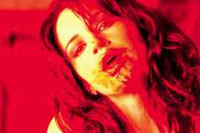
Photo: Legends about vampires and werewolves still live today
Almost all cultures existing in the world have stories telling about living corpses that raise from the dead to feed on human blood. In all epochs blood was considered to be the source of vital force, and creatures known for their ability to suck human blood were awfully terrifying. In oriental countries, evil gods and sinister spirits were said to be bloodsuckers while stories about dead people transformed into vampires were well-spread in the European culture.
The present-day notion of vampires is generally based upon the Slavic mythology. Popular superstitions about East European vampires exerted great influence upon people from neighboring countries, and soon the vampire image got universal for the entire of the world.
Slavic people believed that those who died as a result of killing and suicide stood higher chances of becoming vampires after death. Peasants believed that those who died at their not really old age would keep on living their lives even after death. They said that such deceased needed the vital force of those staying alive and sucked people’s blood as they wanted no other food.
If people apprehended that their deceased relatives could turn into vampires after death they took necessary measures beforehand to avoid such a tragic transformation. It was considered that a dead human would not turn into a bloodsucker after burial if a crucifix or garlic are placed close to the body in a coffin, if a dead man’s clothes are nailed to a coffin or if the heart of a deceased is pierced through with an aspen stake. It was believed that a dead body with a broken heart stood no chance of reviving, and also people thought that a vampire would not rise from a grave if his or her body is fastened tight to the ground.
In Romania, dead bodies of children and young people were kept unburied for several years so that others could have a chance to see if they had turned into vampires or not; at that those staying alive could watch decay of dead bodies. If the process of decay was normal then the dead body was buried completely; and if it turned that dead bodies remained intact for a longer period of time then such deceased were decapitated, garlic was put into the mouths and bodies were pierced through with stakes.
The first study of vampirism was conducted in the 18th century. The history of Serbian peasant Peter Plogojewitz that happened to him in 1725 is the most well-known documented instance of vampirism. The respectable peasant died in 1725 at the age of 62 and was buried in accordance with the local tradition. In two months after the burial nine people living in that village died of some strange disease within eight days. At that, each of the deceased said that a day before the dead Peter had come to visit them. Peter’s widow did not trust the stories until one night her dead husband started knocking on the door and demanding that the woman must give him her shoes. The poor woman was terribly scared and next morning fled from the village for ever.
Locals decided to disinter the dead body to conduct an investigation of the incident. Military men and the priest from the place were invited for an expertise. When exhumed the dead body of Peter seemed quite intact, the dead man had nails and hair longer than at the moment of burial, the skin looked quite fresh but slightly pale and there were stains of blood in the mouth. Locals insisted that the heart of the dead man must be pierced through with an aspen stake. And a fountain of fresh blood rushed outfromPeter’s mouth right at the moment when the body was pierced through with the stake. While locals were burning the dead body of the vampire a military man who was in command of the exhumation wrote a detailed report for his army commanders. Soon, the report was published in the leading newspapers all over the world.
The scary publication gave rise to a war against vampires in Europe. People in all villages suspected at least one of the neighbors of being a bloodsucker; people exhumed dead bodies out from their graves to pierce the dead bodies with stakes to make sure that they would not turn into vampires. That was a real hysteria, and authorities in many countries charged doctors with an official investigation of all mysterious instances to provide a documented confirmation or denial of vampire existence.
In 1746, French theologian Antoine Augustine Calmet published a treatise on all instances of vampirism in Europe he knew. He also cautiously supposed in this work that vampires were probably no myth but the reality. The authority of the theologian was so great that the society immediately stated that existence of vampires was a scientifically proven fact.
The vampire hunting slightly abated in 1768 when Austrian doctor Gerhard Van Sweeten published his work saying that no vampires existed, and all known instances of alleged vampirism could be explained from a scientific point of view.
One of the most revolutionary discoveries in connection with vampirism was made by doctors in the second half of the 20th century. In 1963, British doctor Lee Illis published his monograph “On porphyria and etiology of werewolves” with an analysis of documented instances of vampirism and werewolves in Europe in the 12-19th centuries. The doctor supposed that majority of the instances were not connected with superstitions but with porphyria, an infrequent genetic abnormality that reveals with one human out of the total number of 200,000. He said that in case a parent suffered from porphyria the probability of inheriting the disease by the parent’s child was 25 percent. Like many other genetic dysfunctions porphiria arises from incest, and European monarchs who often married close relatives sometimes suffered from the disease.
As a result of the disease people have problems with pigment metabolism and suffer from hemoglobin decay under the influence of UV radiation or UV rays. Such patients suffer from pains by the light of the sun and have to stay in dark rooms all day long and go out at night only.
In case the disease is getting too serious patients may even have their tendons deformed so that their fingers get curved. The skin around lips and gums grows thinner and harder which makes cutting teeth look like a grin. They have thinner and paler skin, and teeth may sometimes be stained red. In a word, such patients look very much like vampires.
It is clear that the history of Peter Plogojewitz can hardly be explained with the strange disease, but it is likely that people executed as suspected of being vampires or werewolves could in fact be just miserable patients suffering from the disease. Today when gene engineering is successfully developing one can expect that porphyria will in the nearest future stop affecting people.
Bats are the most well-known natural vampires at the time when majority of them in fact feed on insects only. In Central and South America there are vampire bats that suck blood of mammals and birds. Sleeping animals may usually fall victim of natural vampires that may suck up to 40 ml of their blood within 20 minutes. Sometimes natural vampires may attack people, however bites of bats are dangerous for people not because of loss of blood but because of infectious diseases that bats may carry.
Medportal
Translated by Maria Gousseva
Pravda.ru
Subscribe to Pravda.Ru Telegram channel, Facebook, RSS!
Popular
Russia's Ambassador to the UN Vasily Nebenzya said that the urgent meeting of the UN Security Council that was convened in connection with Iran's retaliatory strike on Israel was "a parade of hypocrisy and double standards"



Last materials